
It is HOT in the Tennessee Valley this week, and that comes as no surprise as we are rolling into the heart of summer now. Tomorrow is the start of July, and July to the first half of August is typically the hottest part of the year here. Let’s look at some climatological stats from our area to see what “normal” July weather is all about in our part of the Tennessee Valley. For these stats, we have to use the NWS climate reporting site that is both closest and centrally located to our viewing area. That will be the Northwest Alabama Regional Airport in Muscle Shoals…
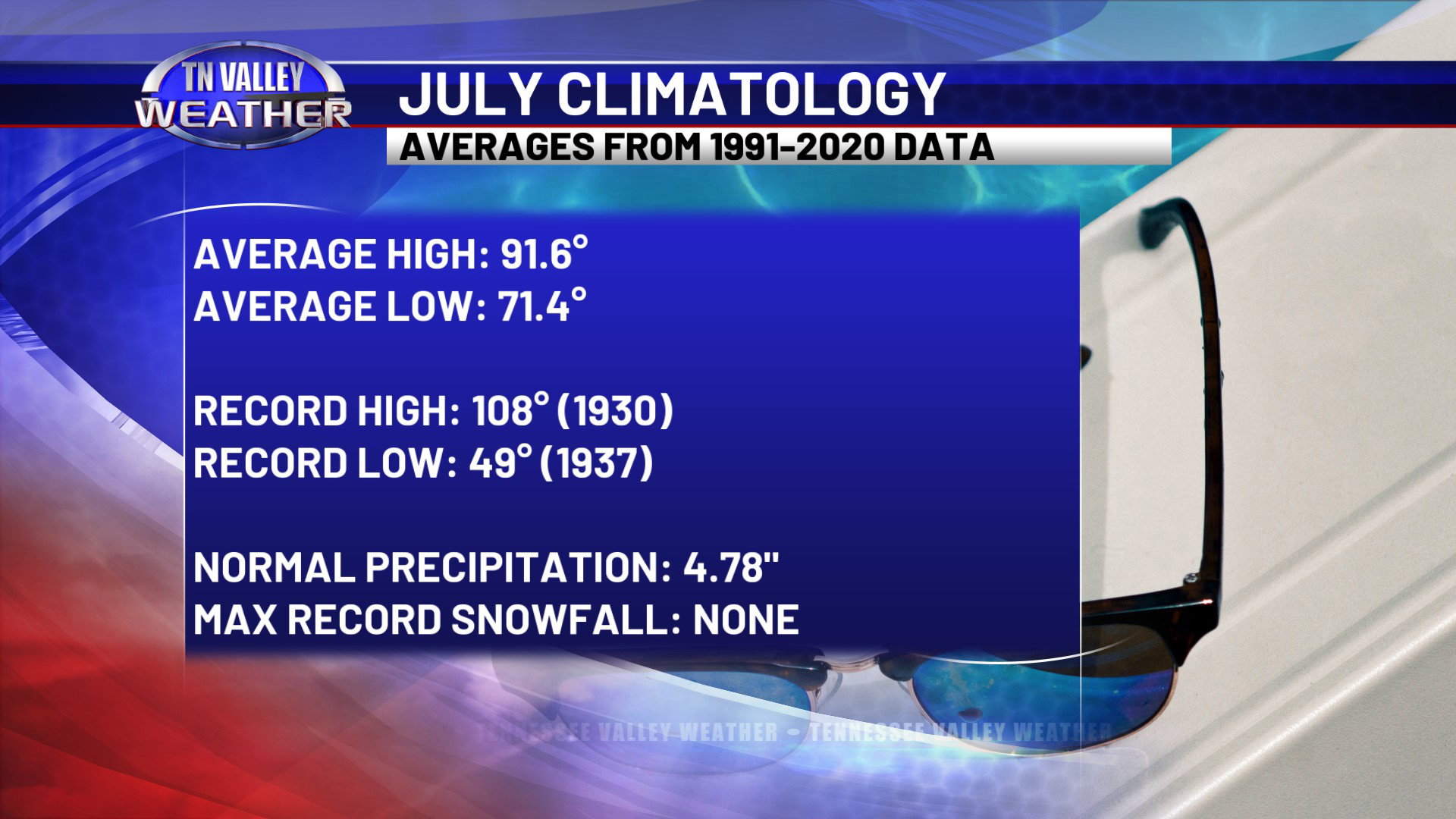
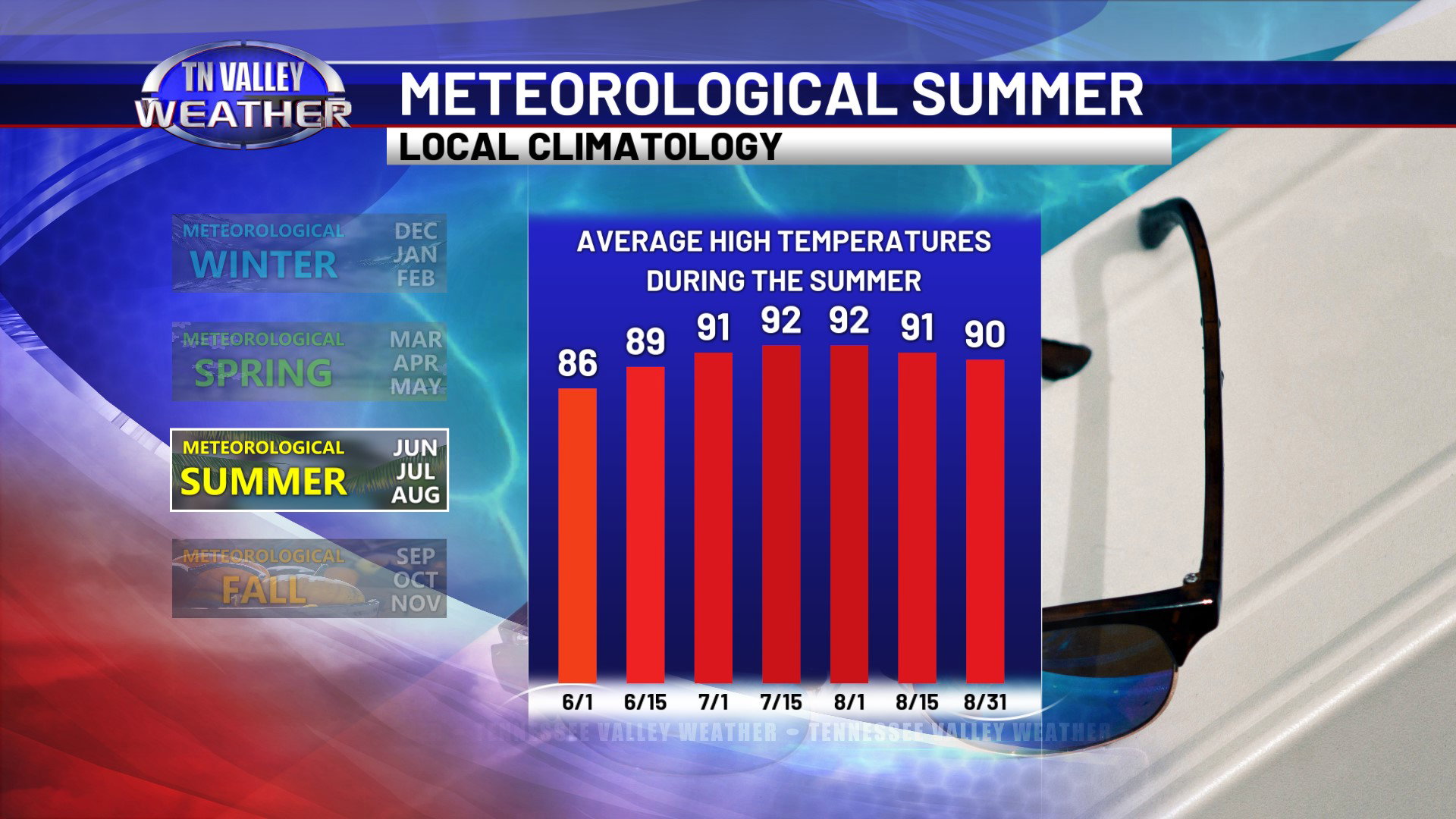
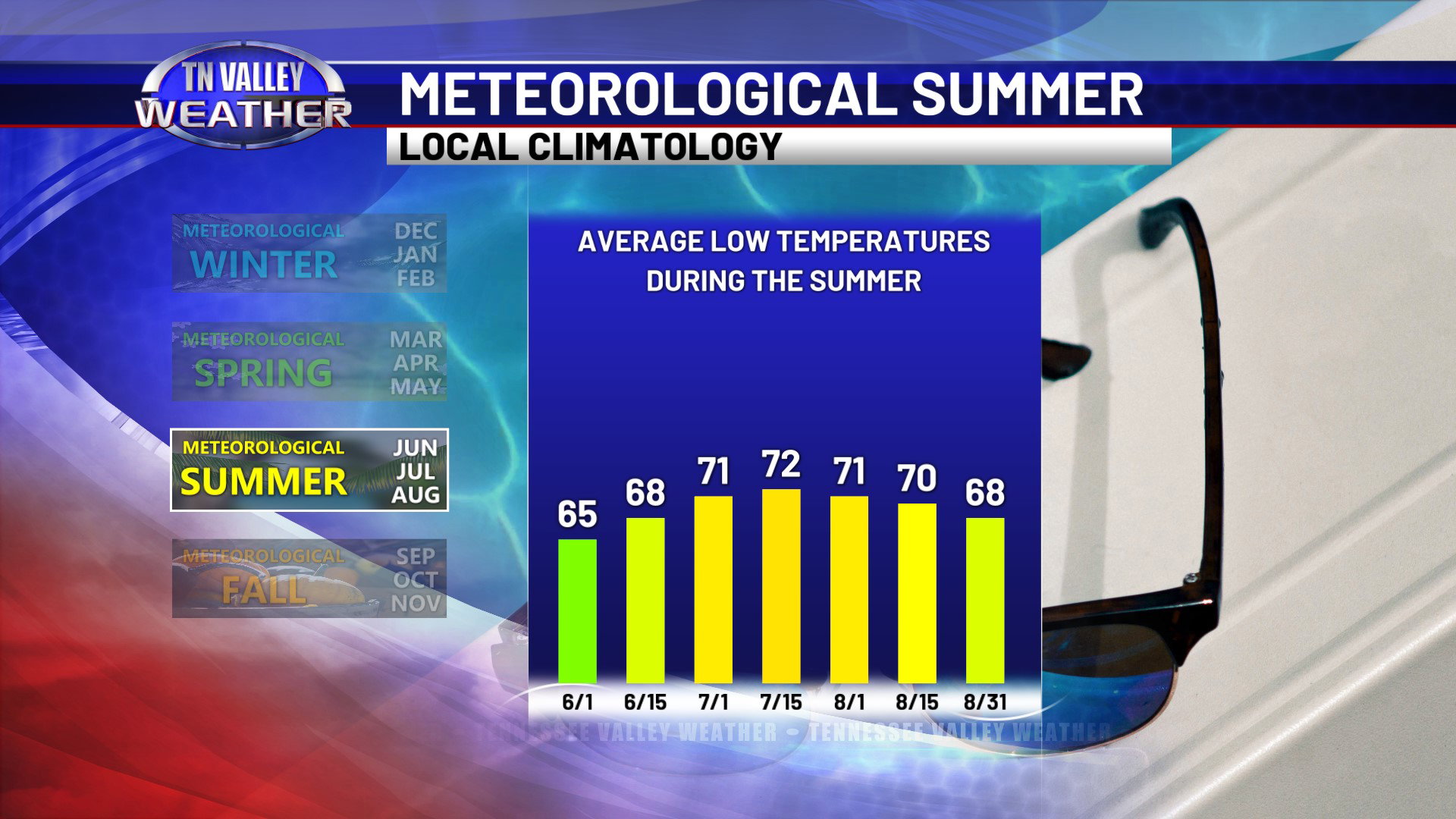
The daytime high for the month averages around 91.6 degrees, with that changing very little from the start to end of the month. The overnight average low is 71.4 degrees. We can certainly still see a wide range in temperatures though, even at this time of the year. The record monthly high was 108, set back in 1930. Astonishingly, the record low was 49 degrees! That was set back in 1937.
Unless we see a big thunderstorm complex roll through or we have a landfalling tropical system, rain in the month of July is usually scattered, random, and uneven across the map. Having said that, we do still typically average around 4.78″ of precipitation for the month. We are near the Gulf, and with moisture feeding in from there and sometimes the Atlantic, scattered heat of the day showers and thunderstorms are often to be expected.
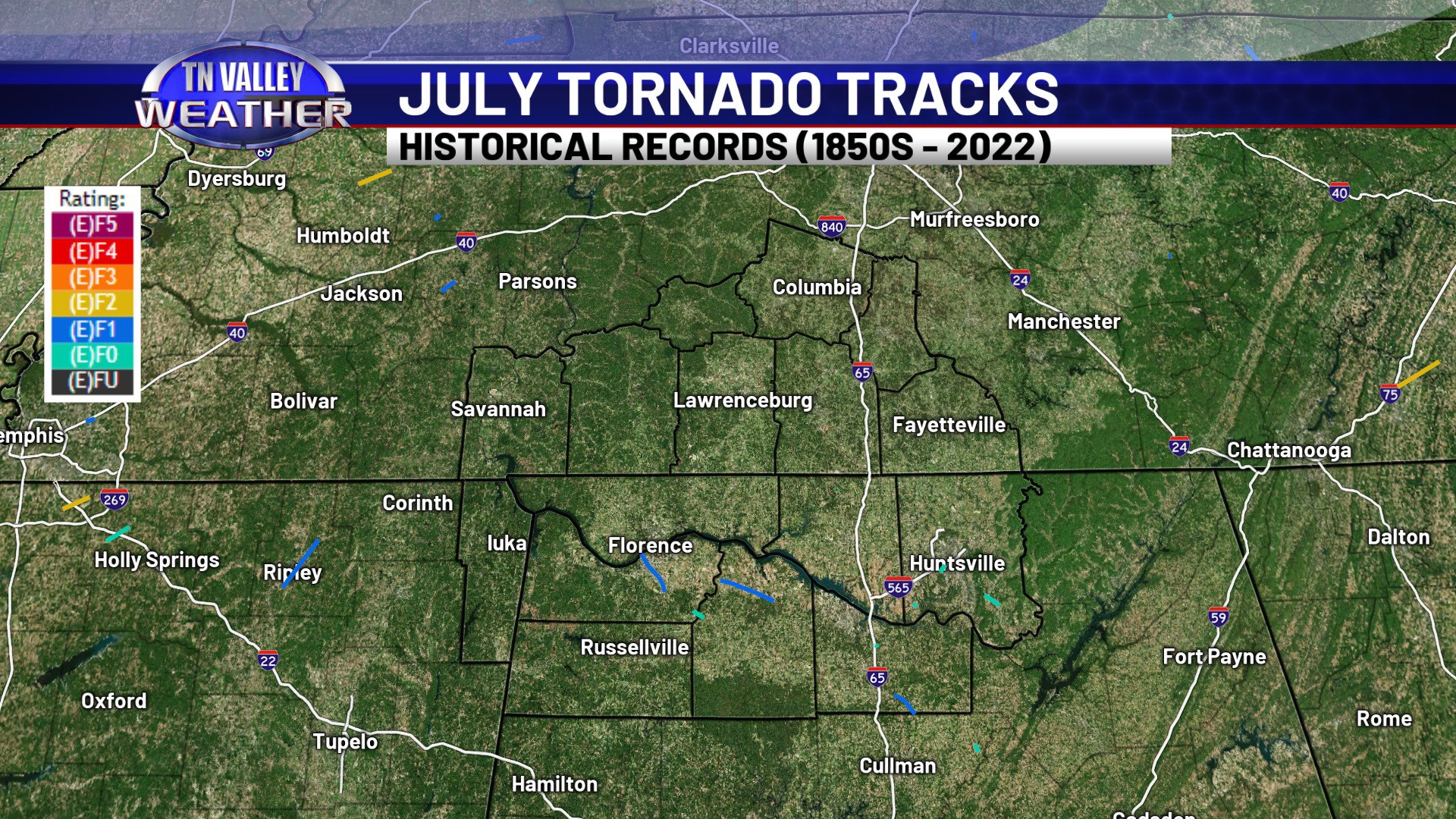
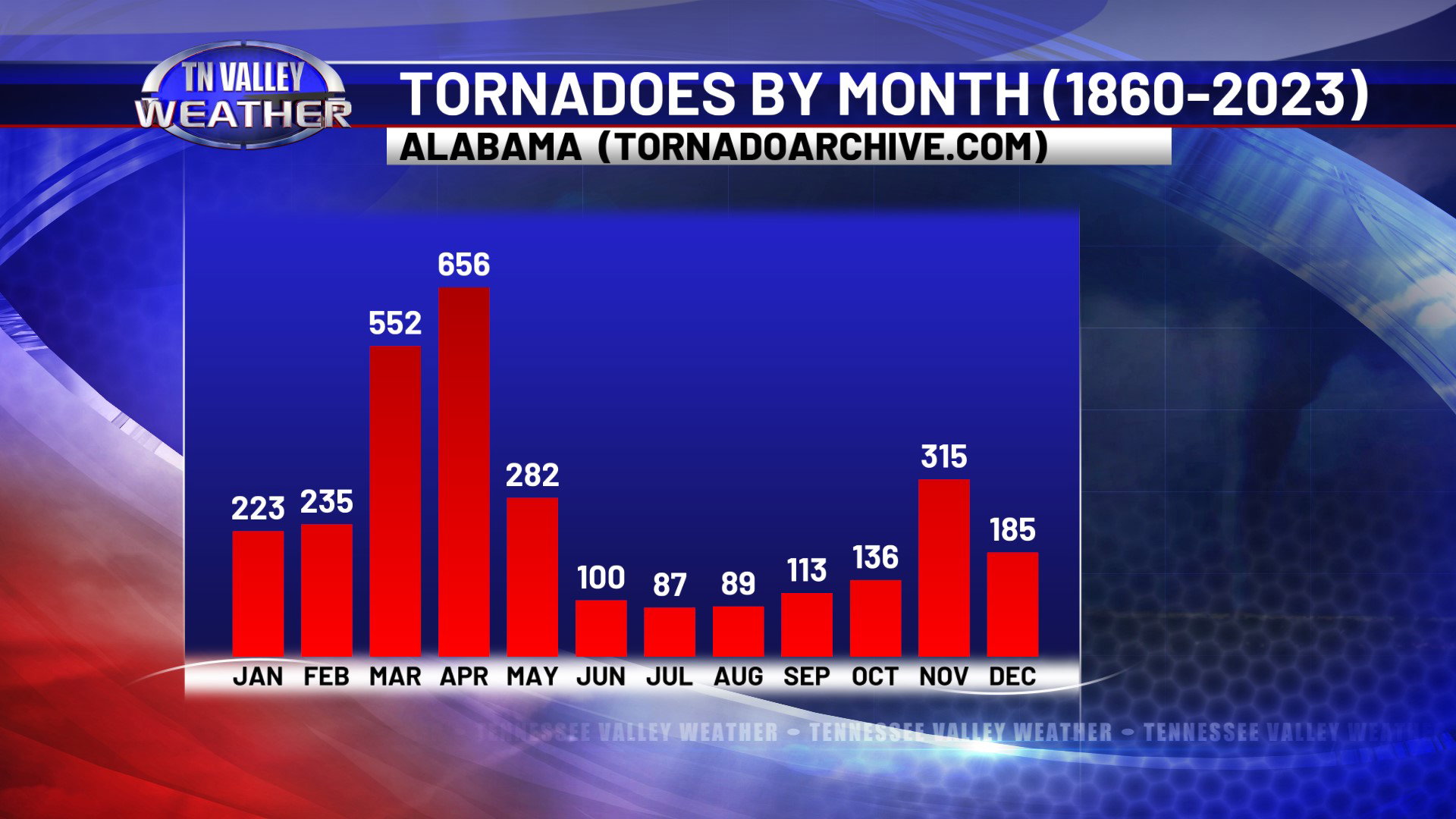
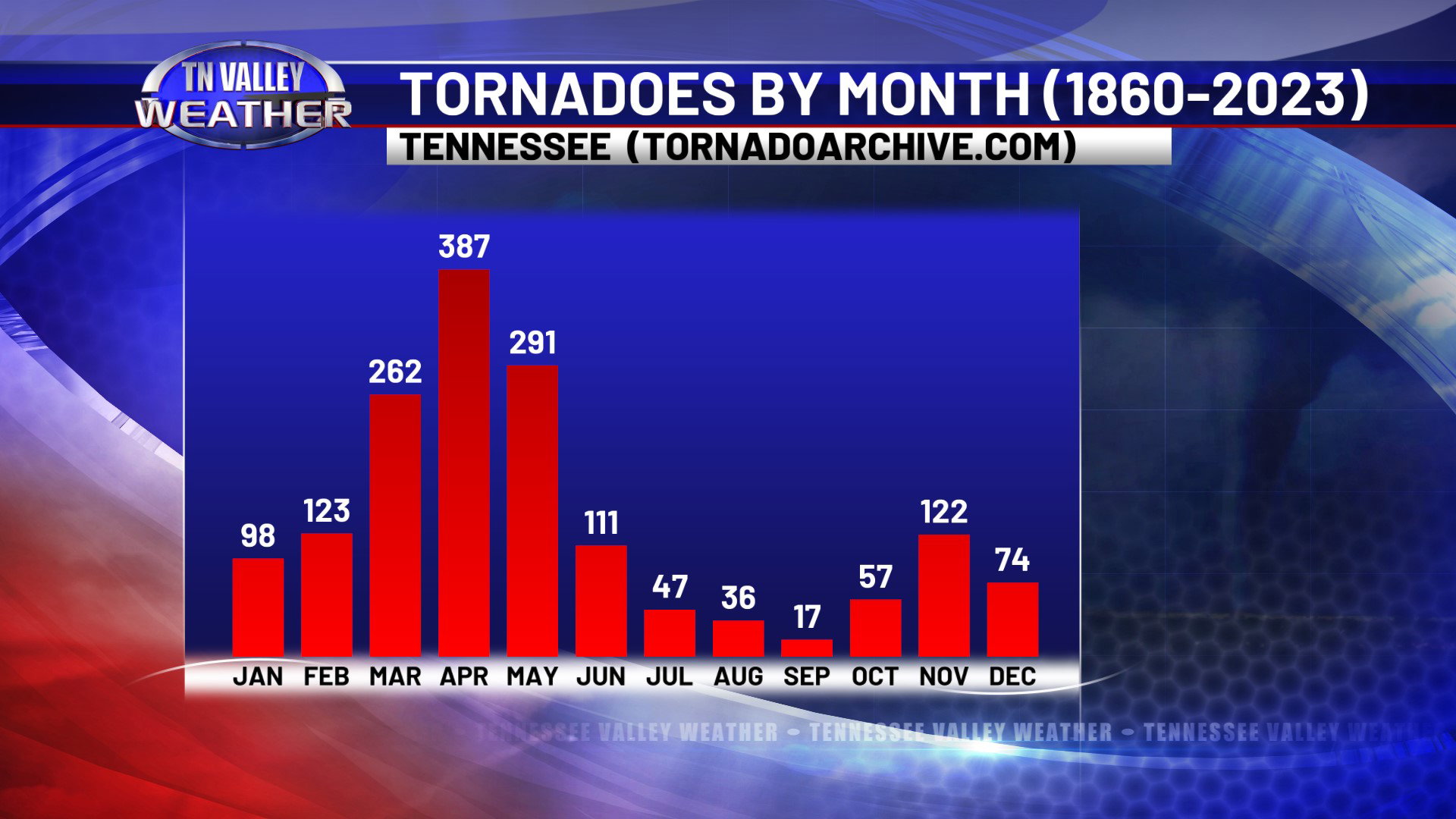
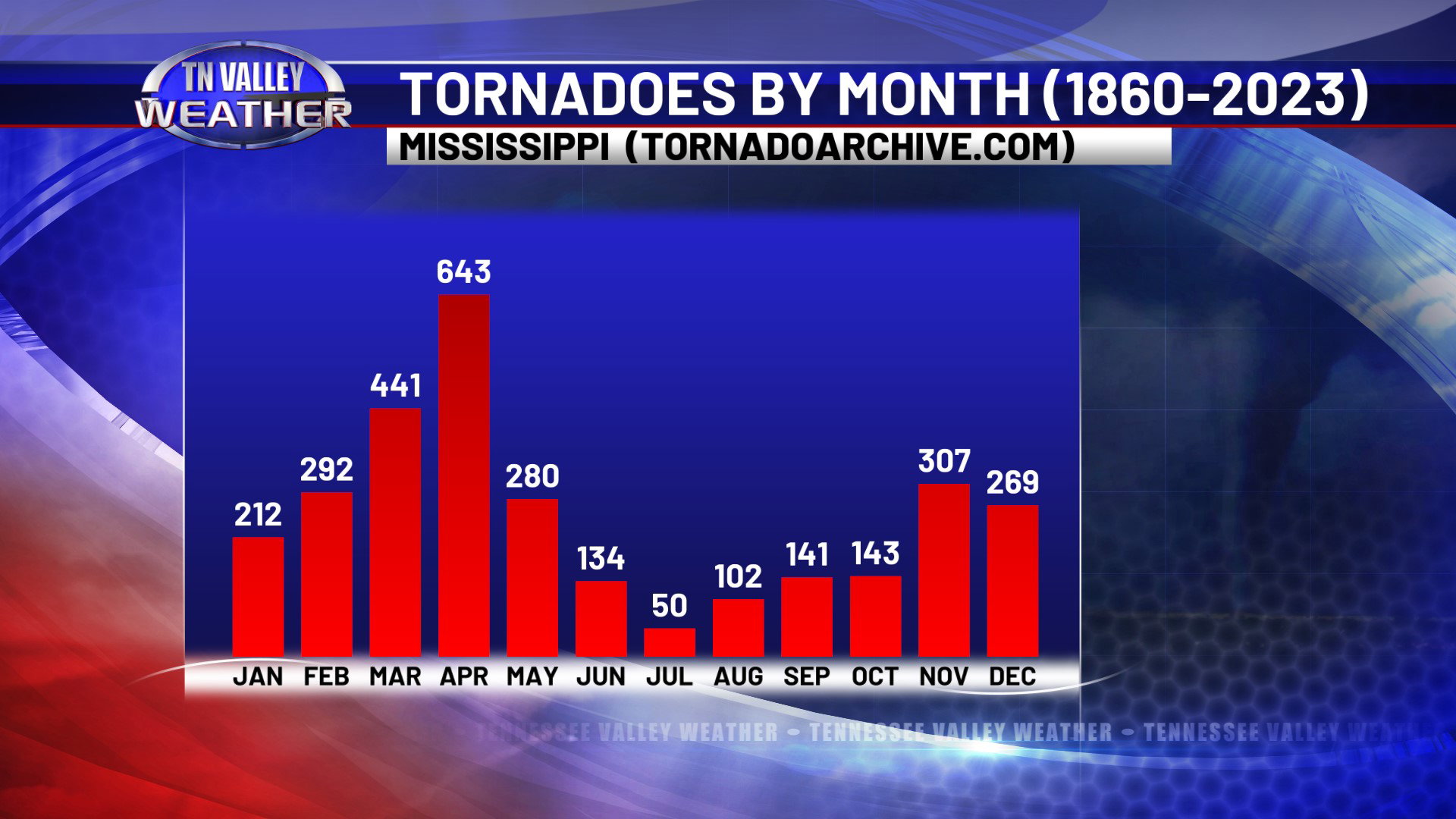
Severe storms can and do still happen in the month of July, but they are mostly restricted to either thunderstorm lines/complexes that produce widespread damaging winds or pop-up storms that produce spotty damaging straight-line winds. The tornado threat in July, overall, is very low… but it’s not completely zero. The very few tornadoes that we get in July are most typically associated with the remnants of a landfalling tropical system, but they can very occasionally happen when pop-up or clustered storms merge or within small-scale spin-ups within a line of storms. In any of these cases, they are typically the smaller, brief, lower-end type tornado instead of the big, long-track ones.
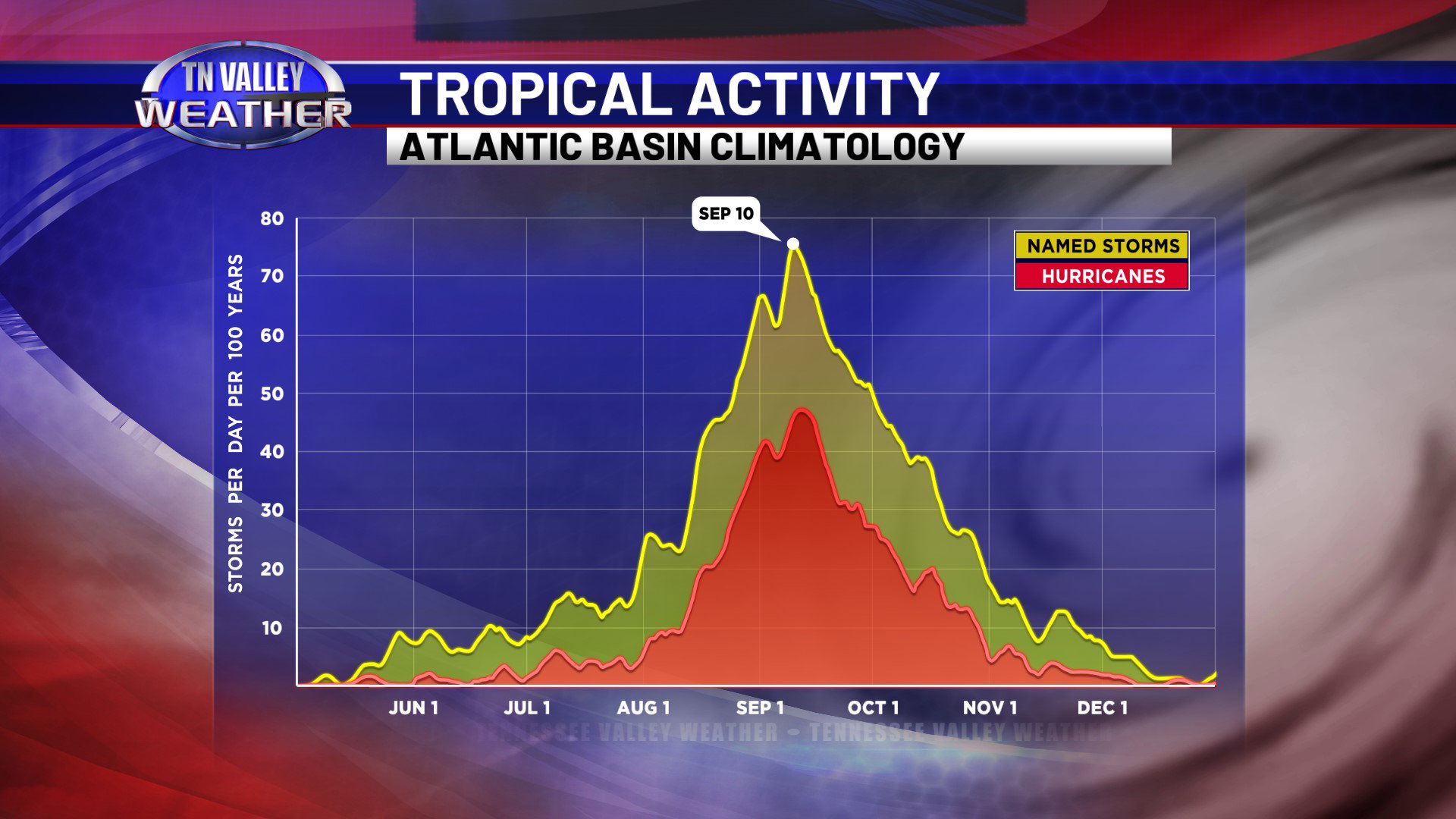
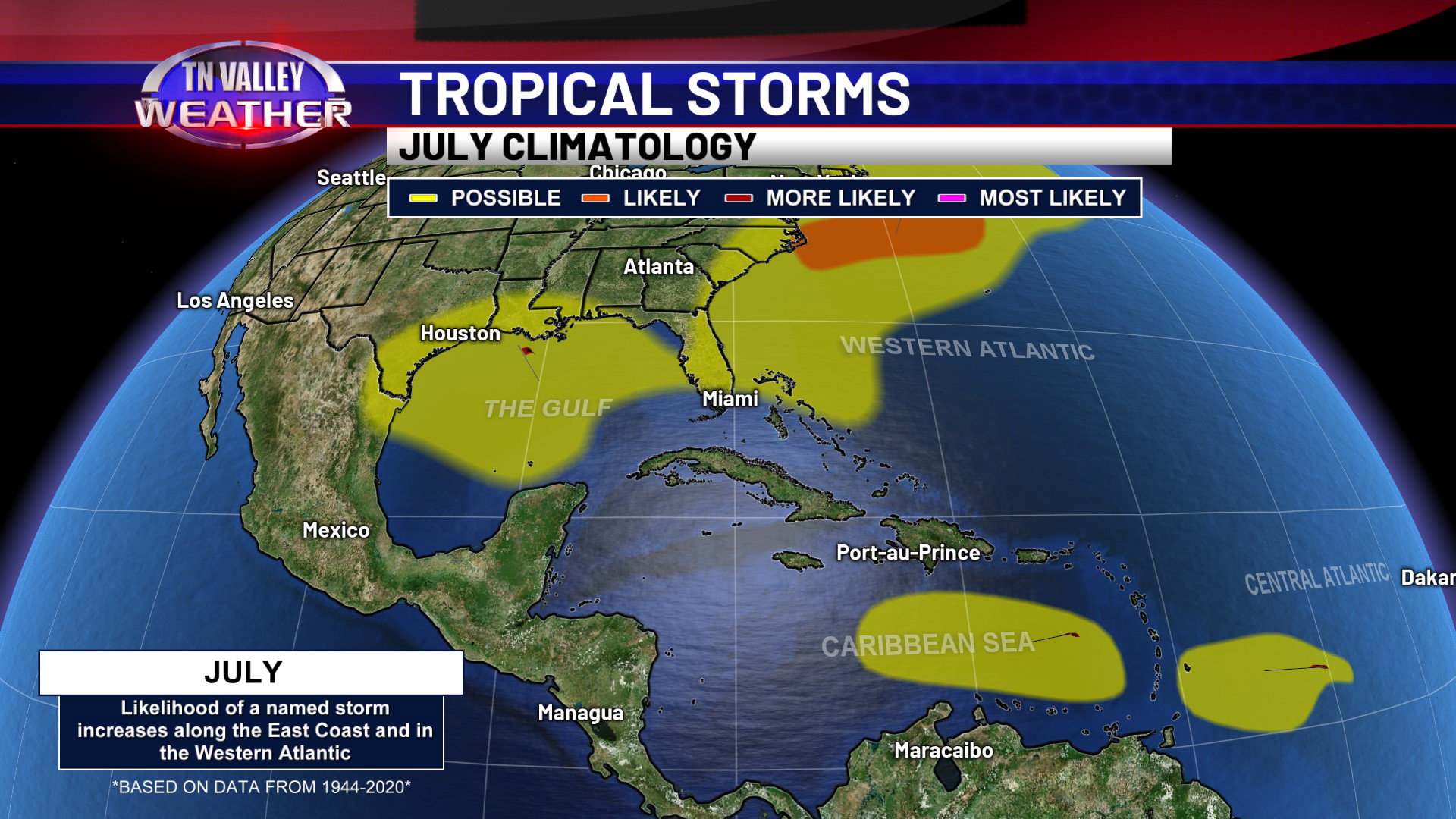
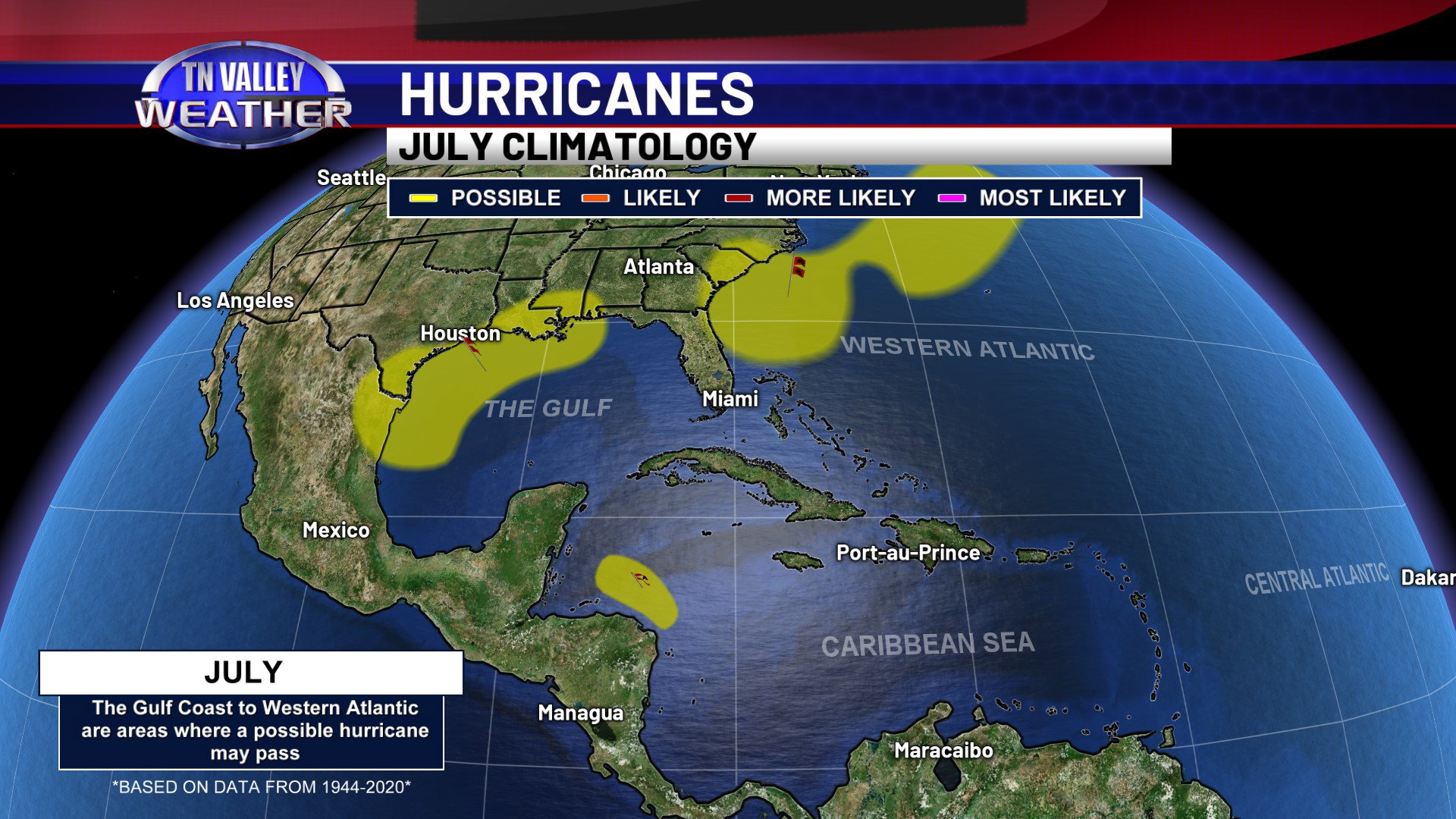
We do have to keep an eye on the tropics during the month of July. The hurricane season runs from the first of June through the end of November for the Atlantic basin. Tropical systems aren’t super frequent in July, but they DO happen, and that does sometimes even include hurricanes. The most likely zones, relatively speaking, to see development would be off the East Coast of the U.S. and back through the Gulf. Once we get later into July, tropical systems start to become more possible in the Caribbean back into the central Atlantic as African wave systems start to get more organized.
