
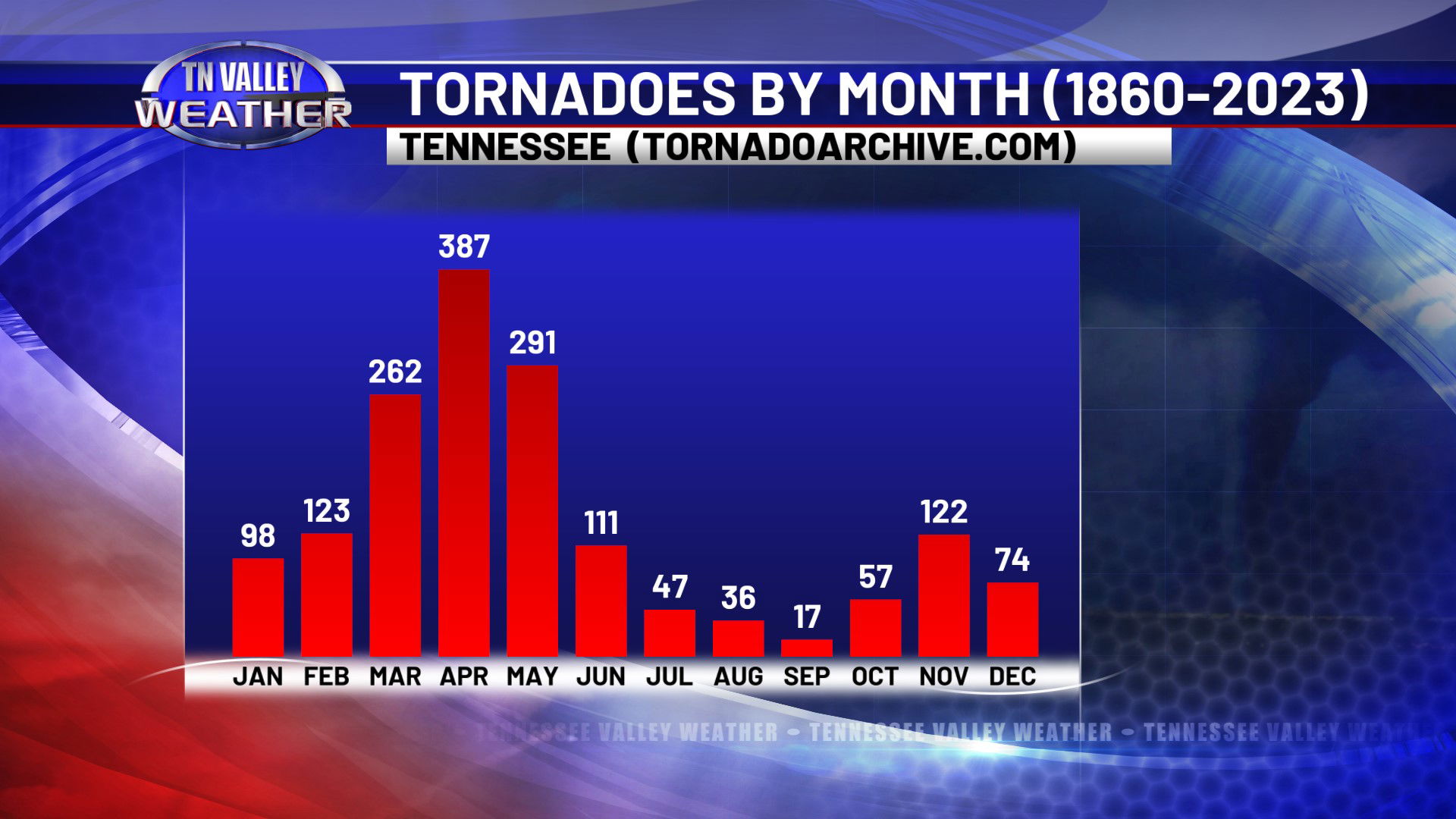
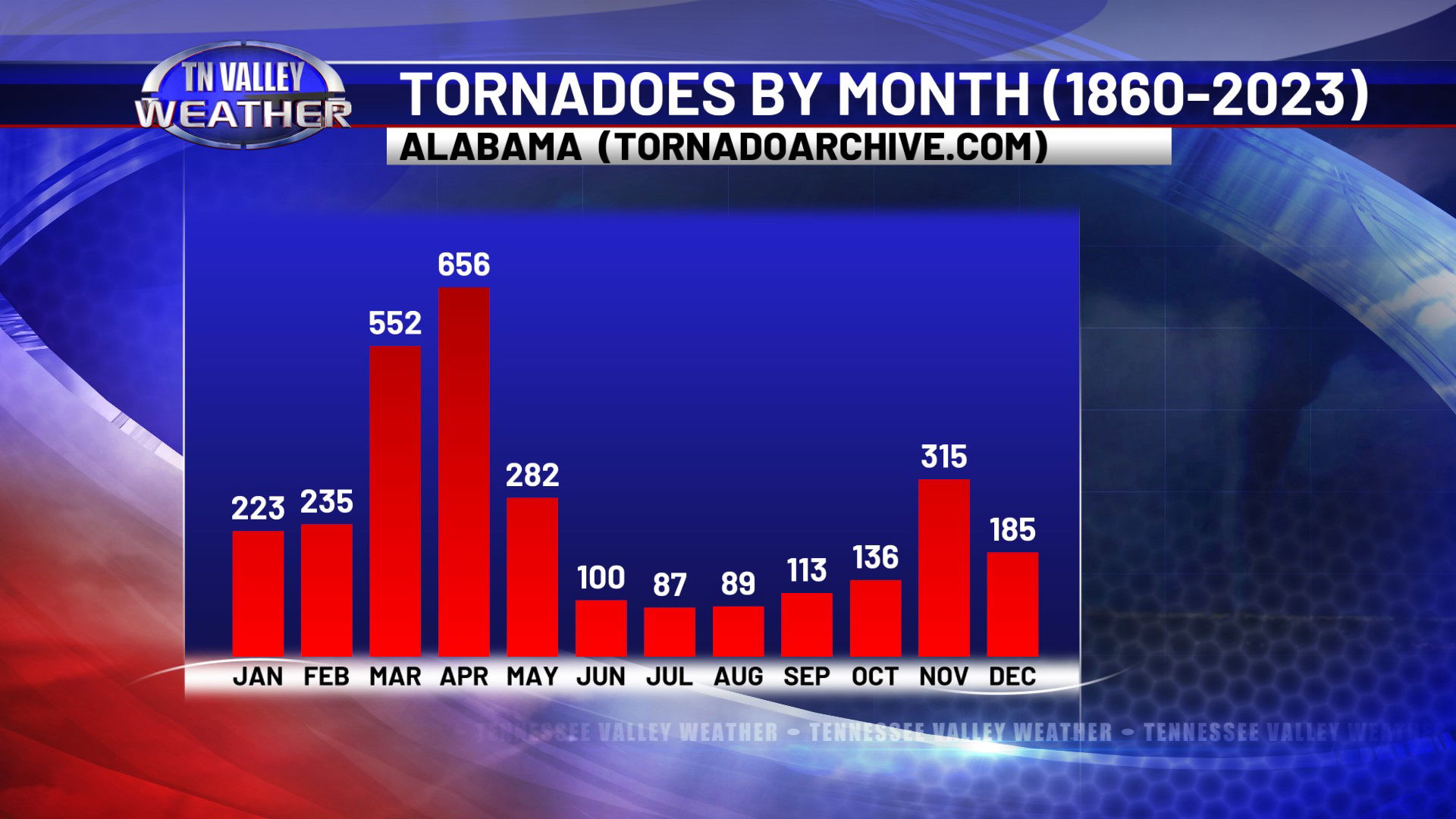
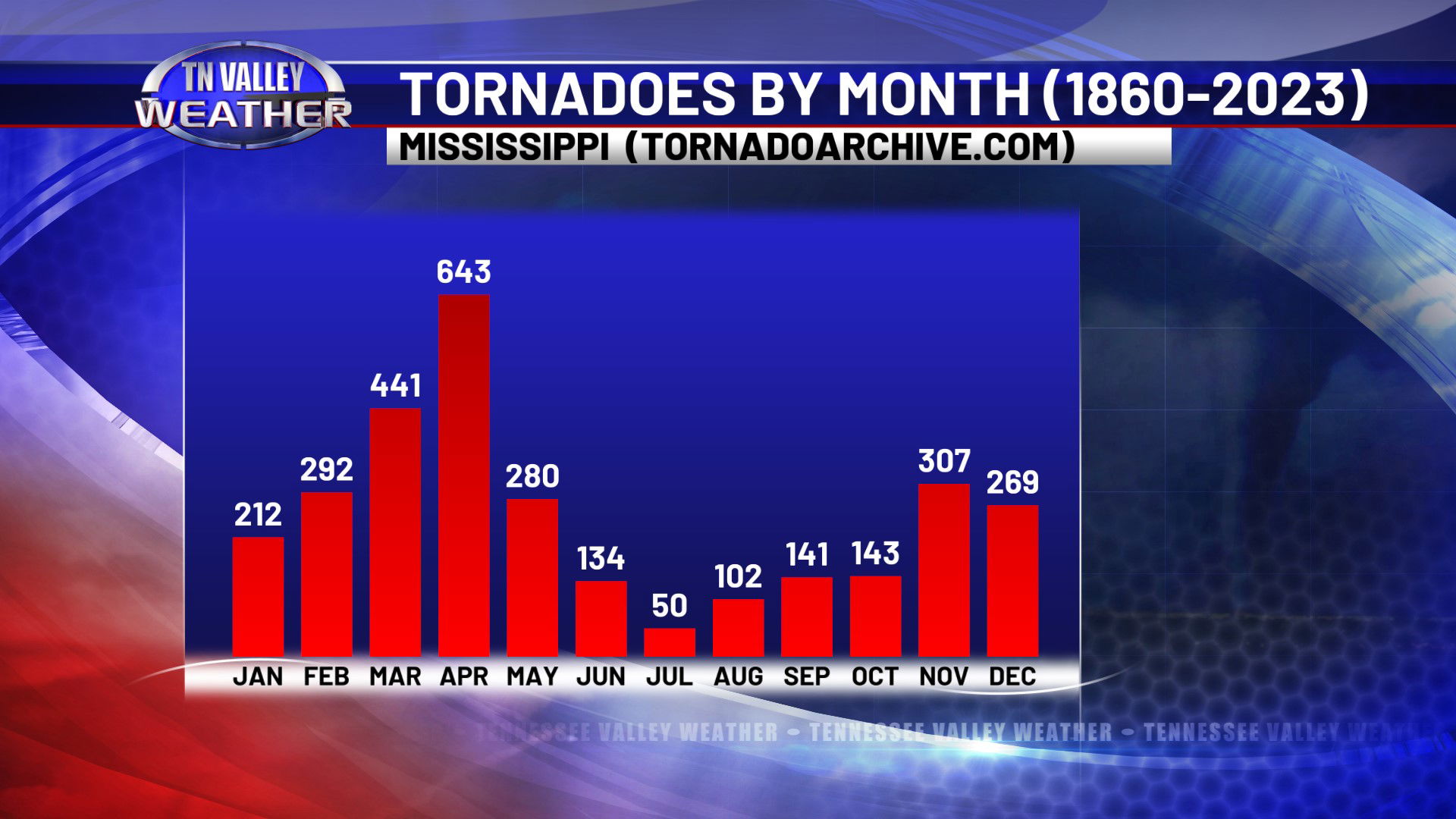
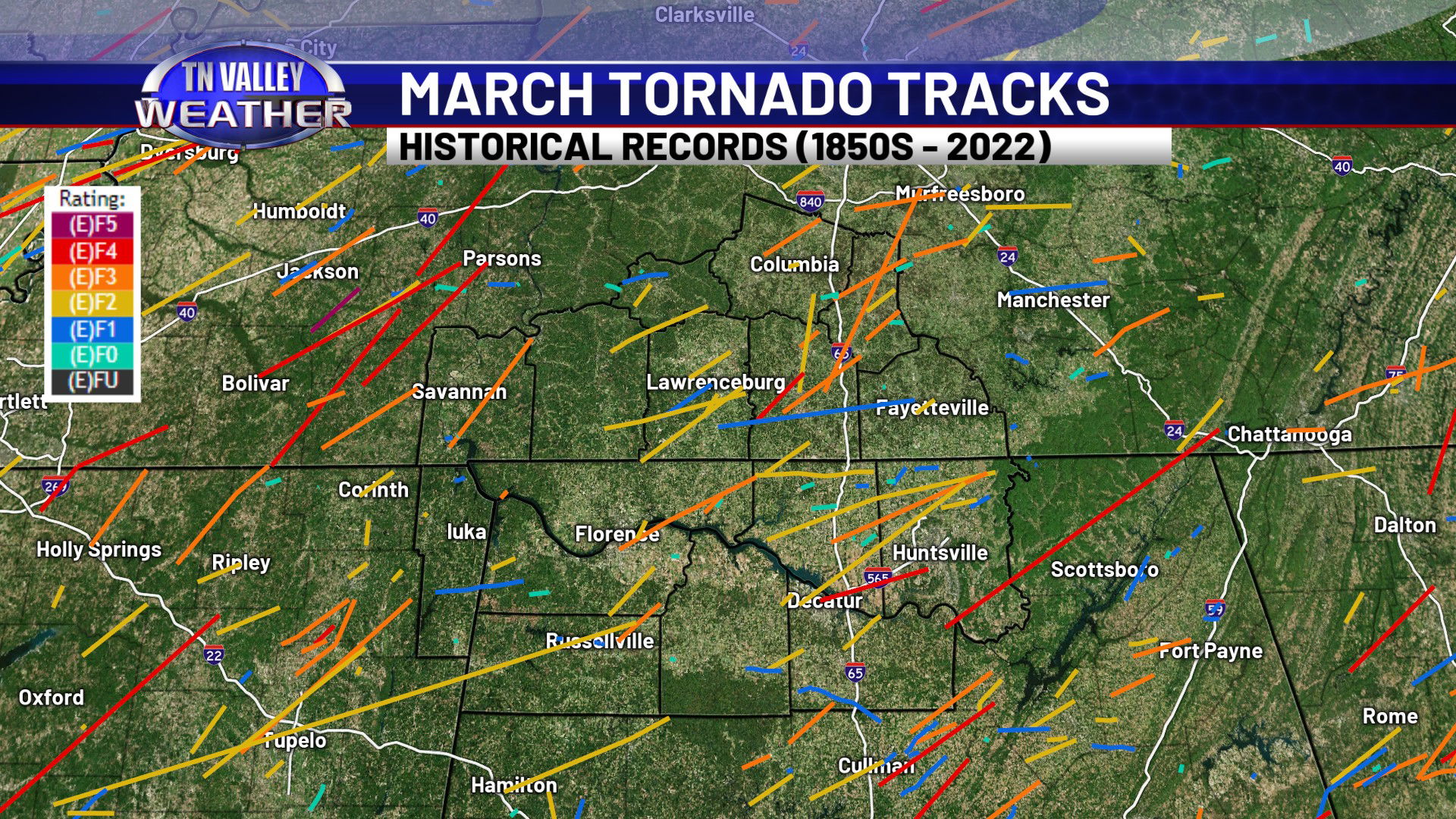
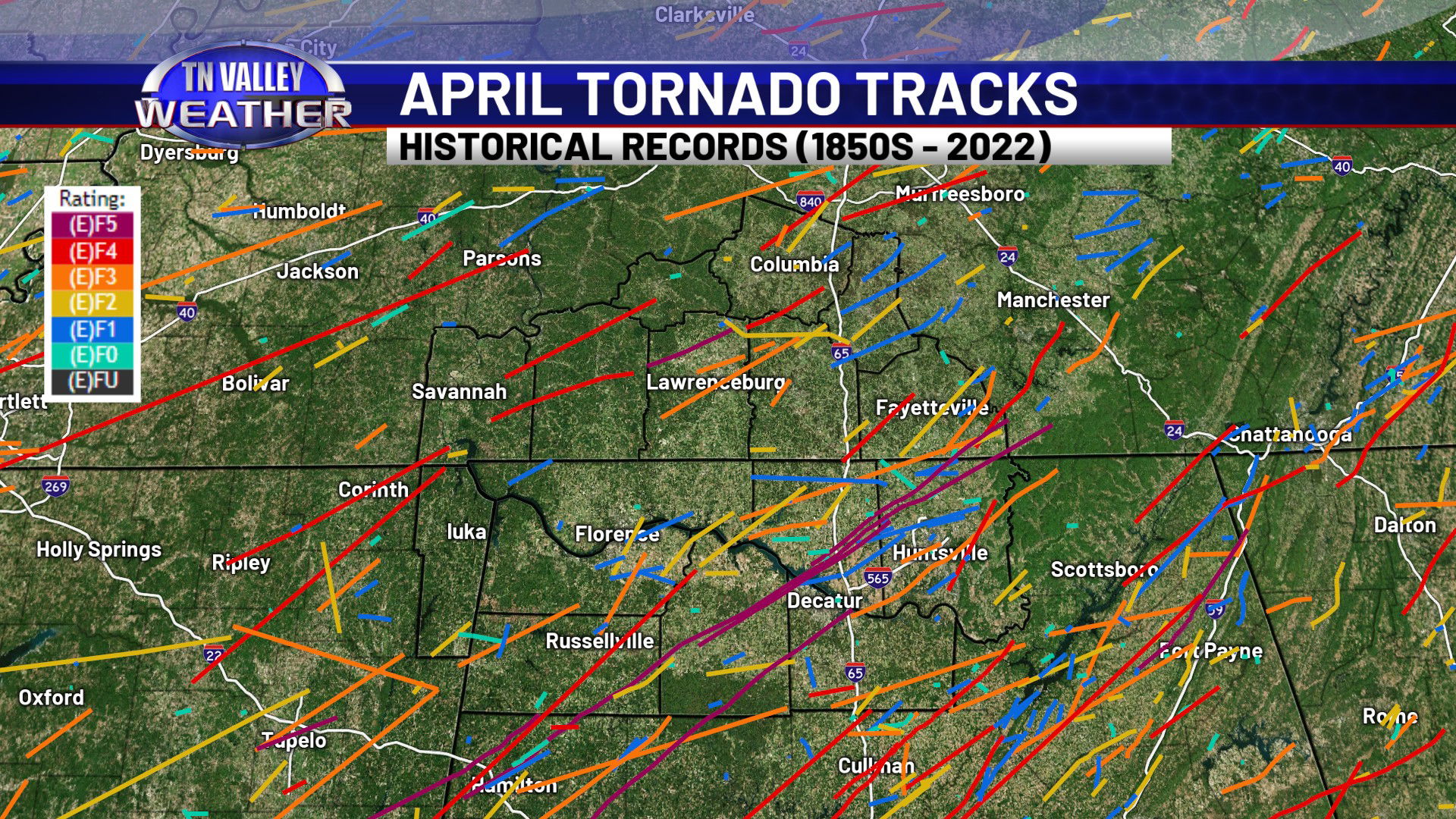
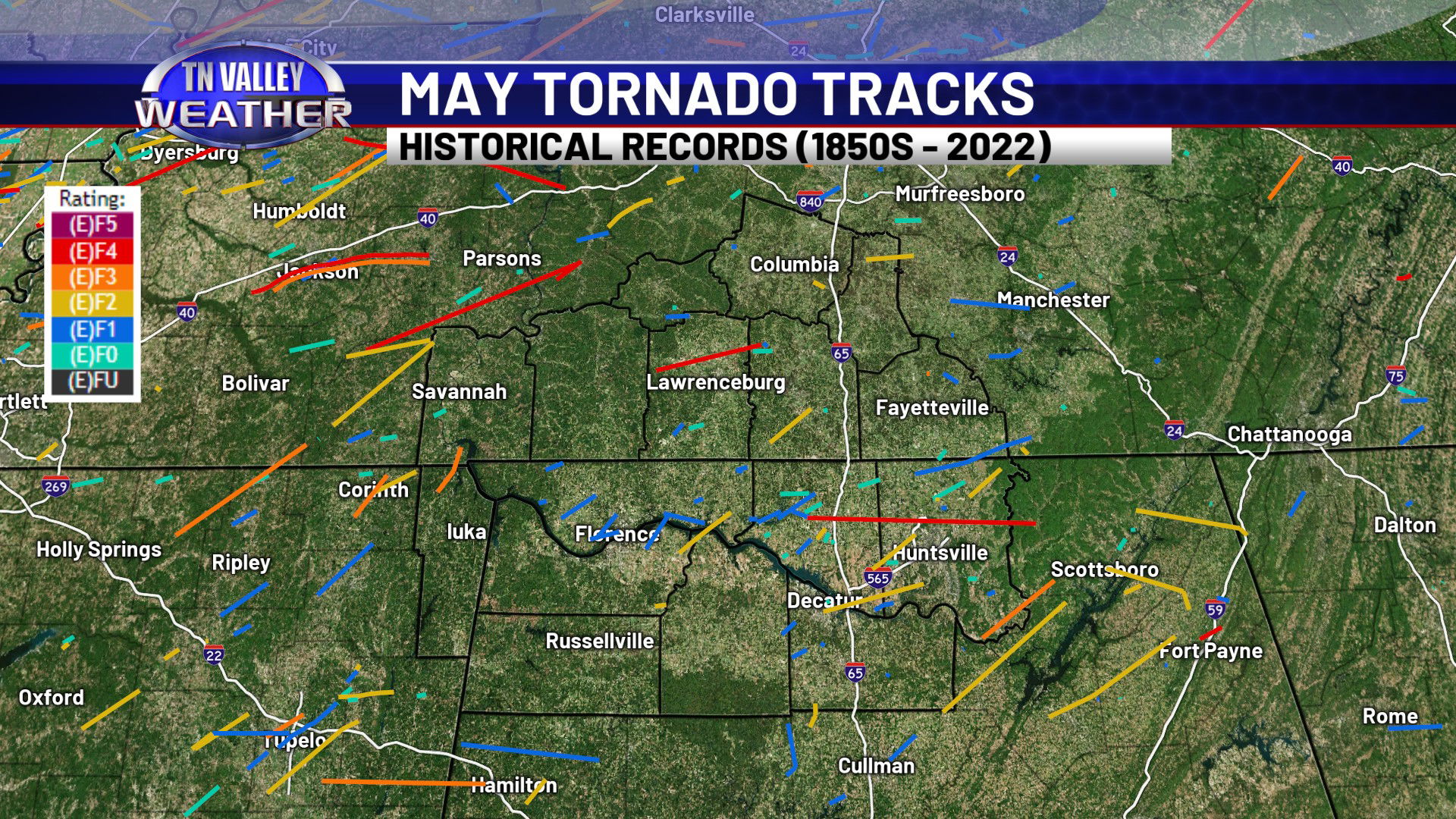
It’s no secret that the spring months are often an active time in terms of weather here in the Tennessee Valley. We are right in middle of the change of seasons as the jet stream is still nearby from its southerly winter track, but an increasing sun angle gives us warmer temperatures and higher instability. Although our tornado season as a whole runs from November through May, it is March, April, and May that are historically the most active, and well as the months that are most prone to the larger and more violent type of tornadoes that we sometimes see here in the Tennessee Valley. Historically speaking, April is the most active month and the most violent month, but we have seen large tornadoes on more than an isolated basis in March and May as well.
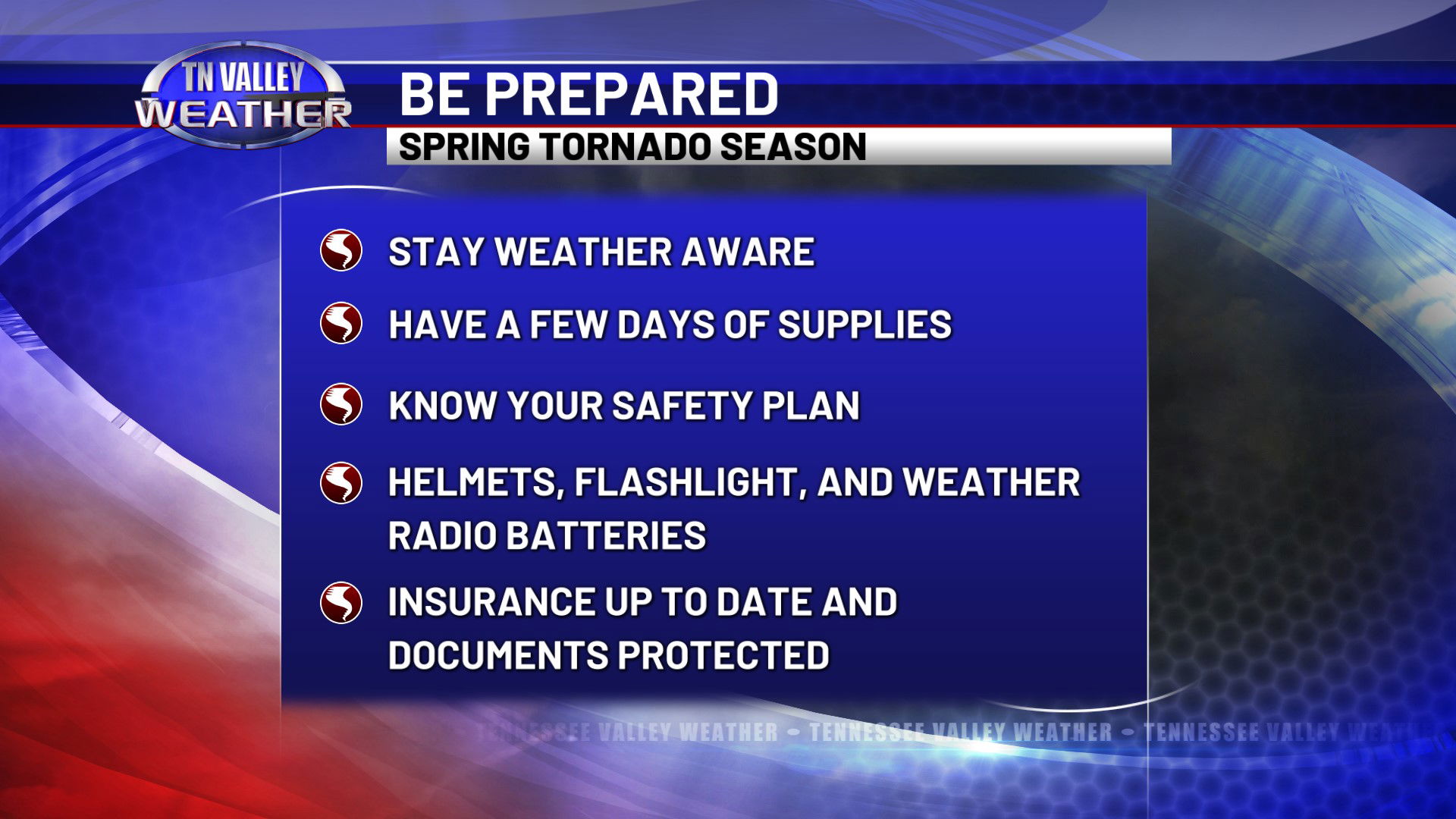
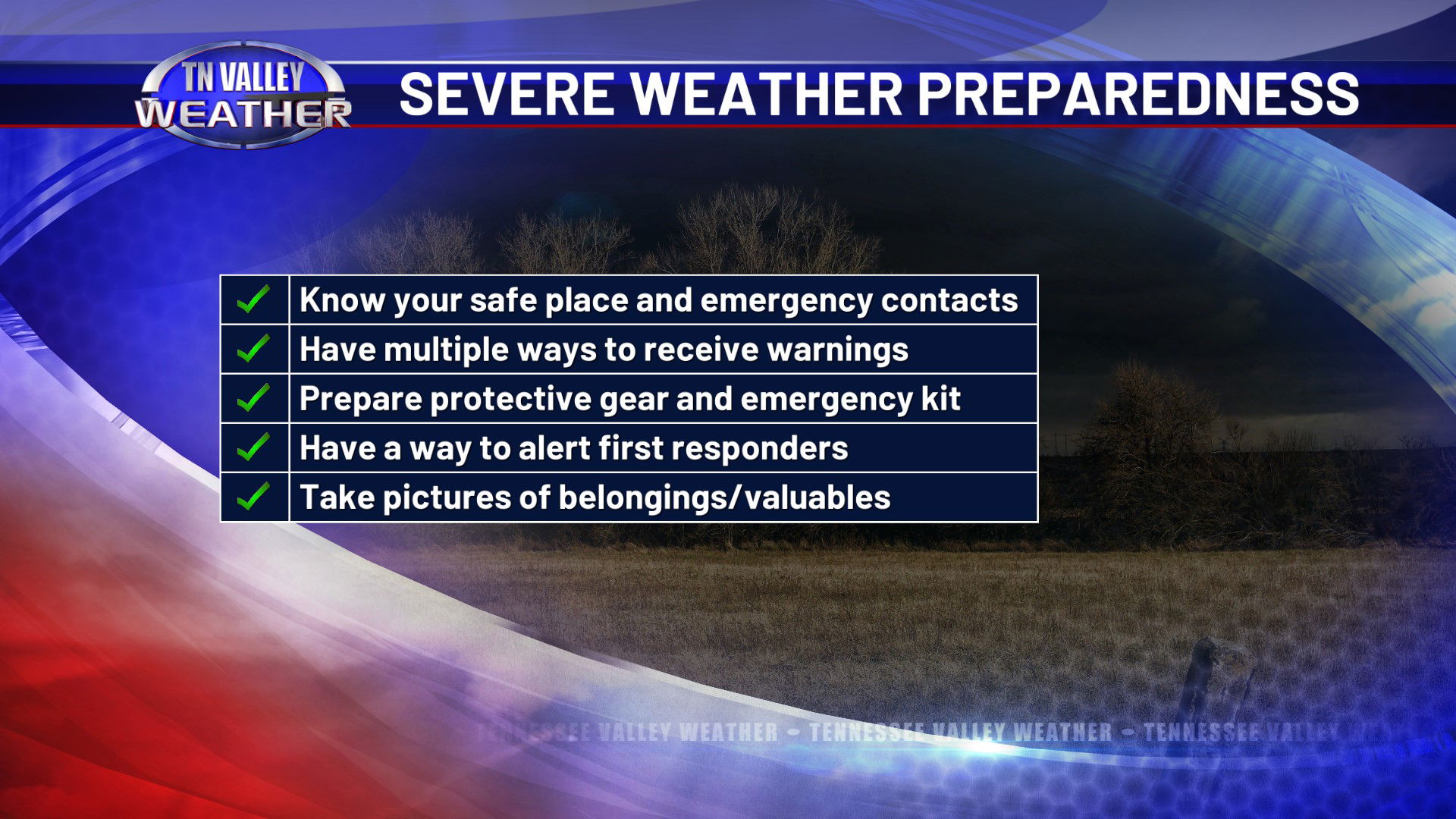
It is critically important that you are prepared for severe storms, and that you are prepared ahead of time instead of waiting until a storm is bearing down on you and is minutes away. You have to have a safety plan in place ahead of time for you and your family, and if you don’t already have one, the time to formulate that plan is now, while the weather is quiet. One of the first things is to have a general sense of weather awareness. As we get into the heart of spring severe weather season, storm threats can come as frequently as more than once a week, and conditions and forecasts can change rapidly. Checking in with the latest weather information at least once or twice a day to stay updated and informed should be a critical part of your severe weather safety plan.
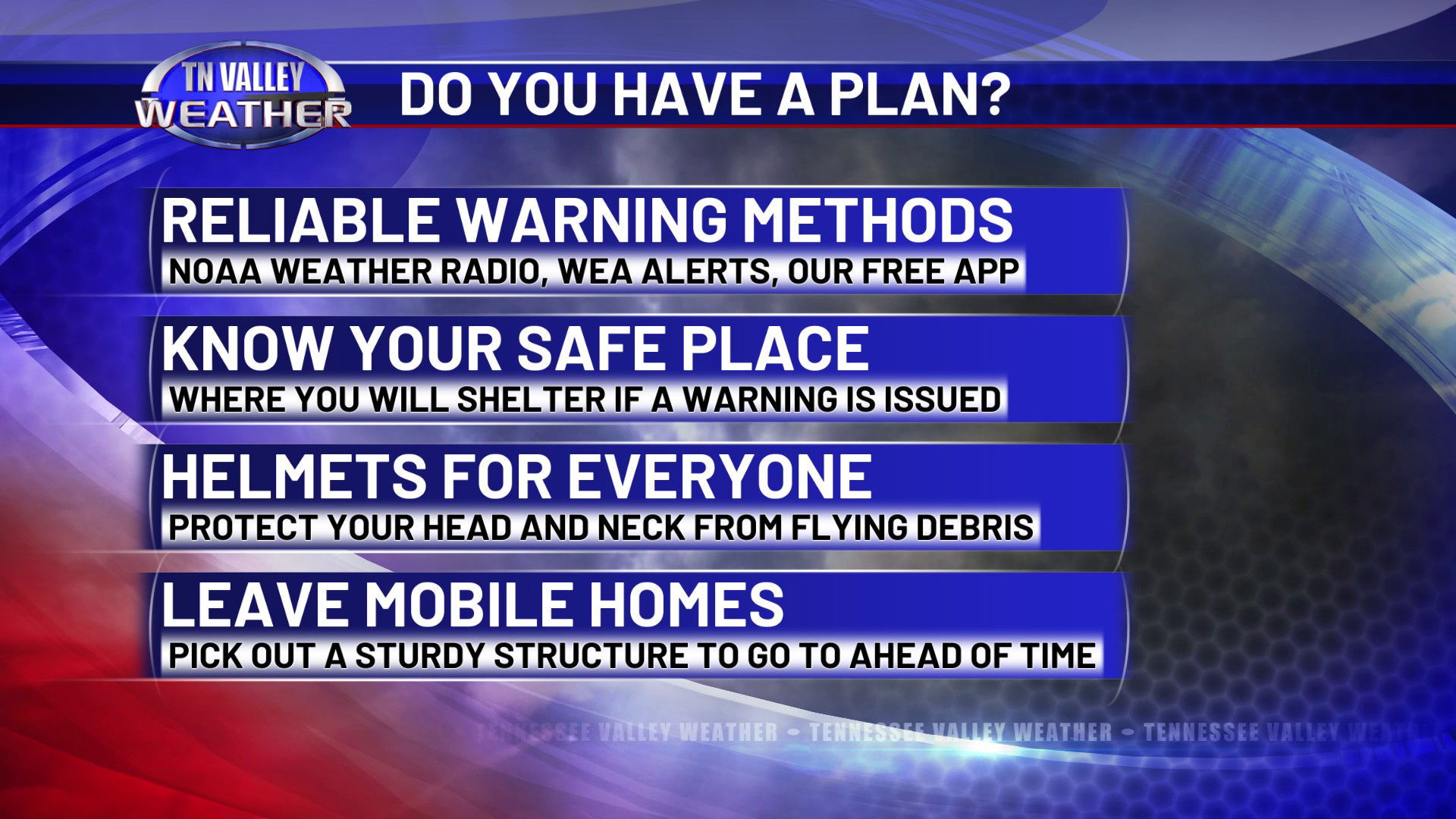
From there, you need to formulate the plan for where you will seek shelter if a tornado or severe storm threatens, and that plan needs to be made known to every family member, and it needs to be rehearsed so that it is second nature to everyone. For those of you who live in mobile homes, that plan has to include leaving for a community shelter or a sturdy structure before the storm arrives. You have to come up with that plan while the weather is quiet, so that you aren’t scrambling to think about it at the last minute with a tornado just moments away.
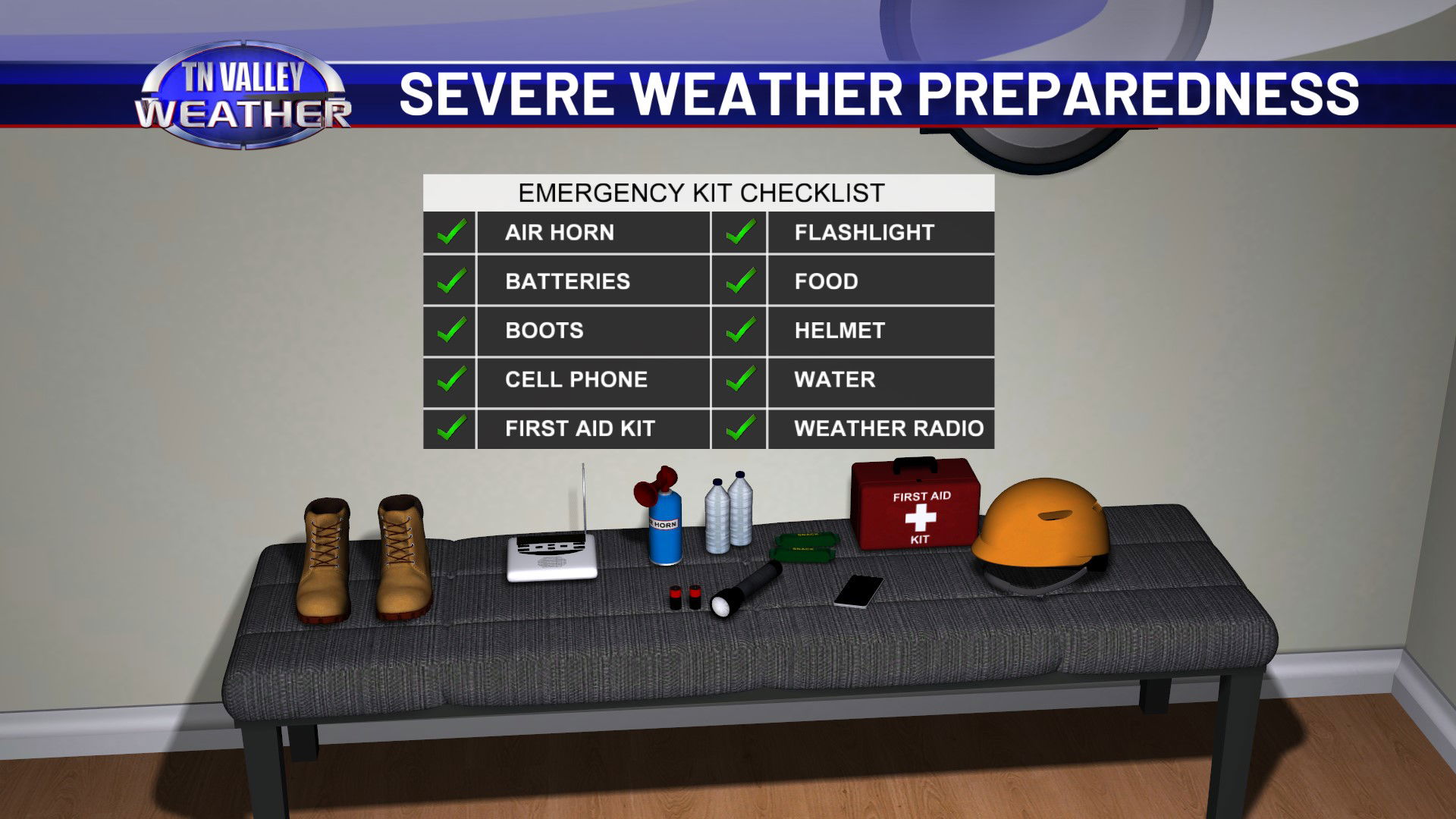
Your severe weather plan should also include basic items to put into an emergency preparedness kit. Some of the important items to have are listed in the graphics above. It is also a good idea to make sure your insurance documents are up to date, including taking general pictures of your home and vehicles, and that your documents are safe and protected.
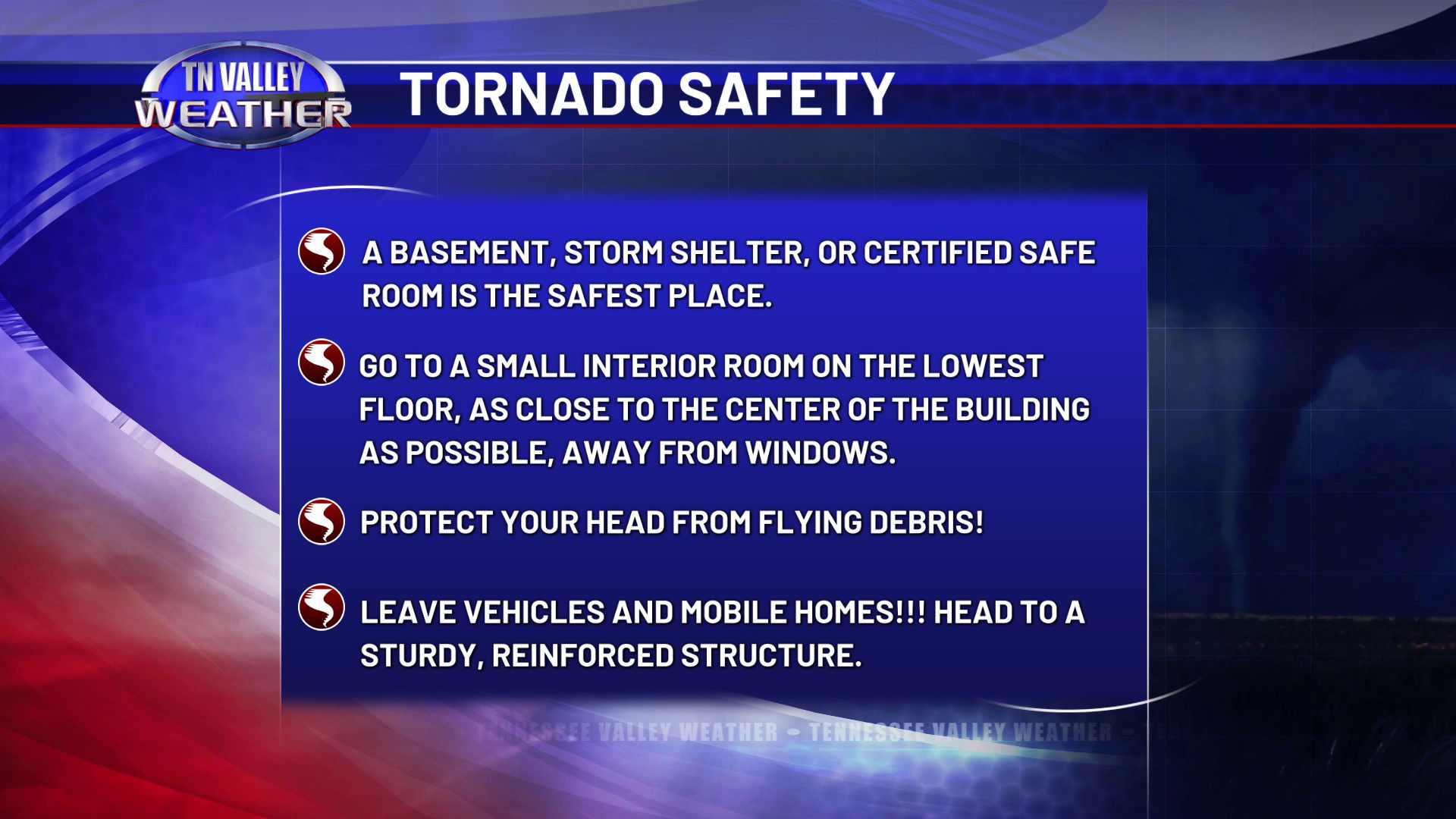
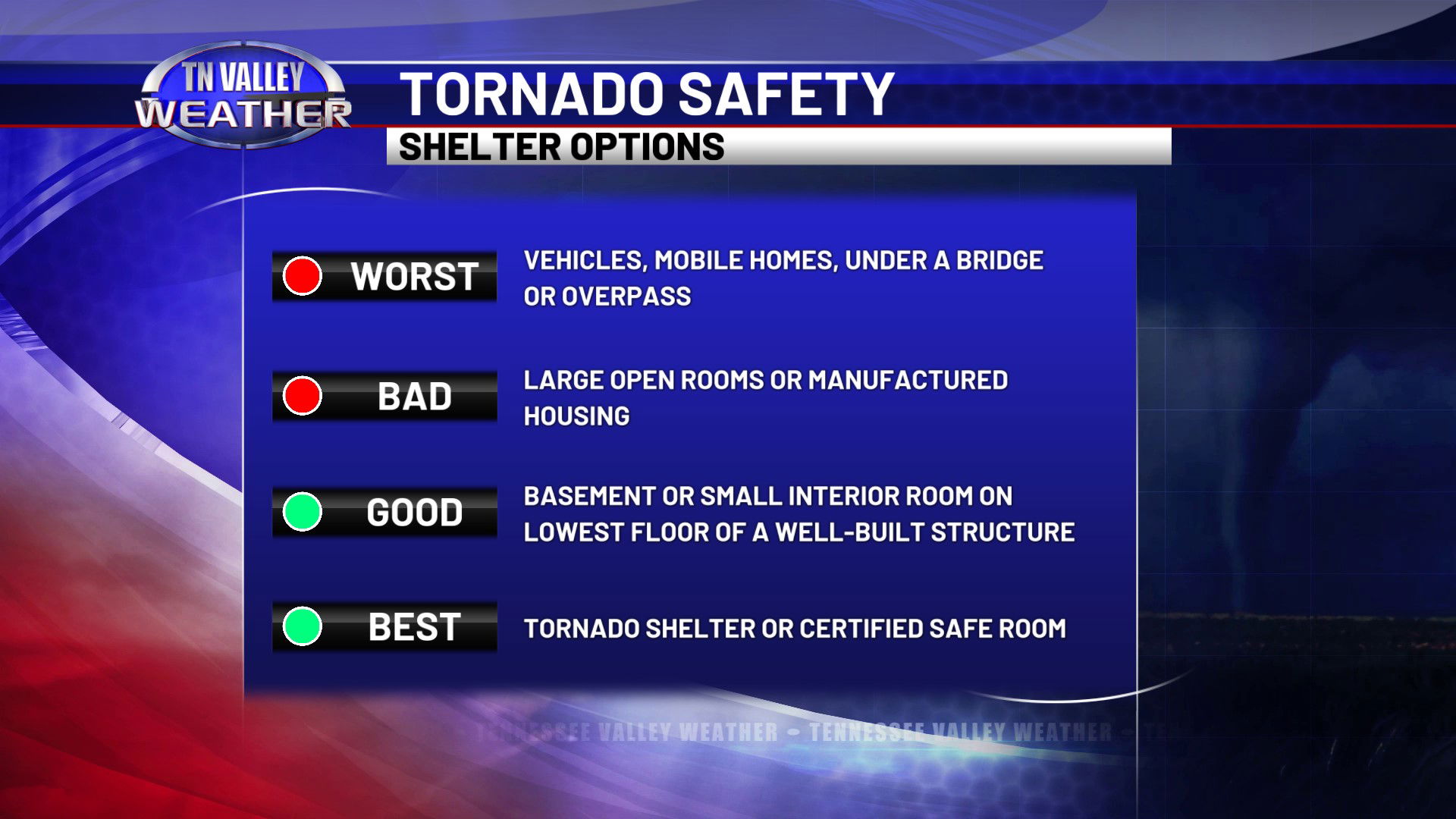
As you formulate the plan for where you will shelter, it is important to remember the basic tornado safety rules and to understand which types of structures are good options and which are not good. The two absolute worst places to be are in a mobile home or a vehicle. You have to leave those and find a sturdy structure. If you’re in a mobile home, you need to decide ahead of time where a good shelter location close to you will be: something like a community shelter, a church or community center that publicly designates themselves as a shelter location, or even a 24/7 gas station, restaurant, hotel, etc., that is minutes away or less and can offer you a safe place to ride out a storm. If you’re in a vehicle and you find yourself in a tornado warning, the best thing to do is quickly but safely head to the nearest sturdy structure available to you and shelter. However, if you are driving and you are immediately threatened by a tornado, you may find a situation where you have to stop and seek shelter in a low-lying spot like a ditch, being sure to crouch low and cover your head and neck with your hands to try to shield those parts of your body from flying debris. HOWEVER, you also have to consider the potential for flooding, the possibility of dangerous critters in the ditch, and the potential that your vehicle could be rolled over or tossed over on top of you.
If you live in a site-built home, there are some basic shelter rules for you to follow. A basement, underground shelter, or certified safe room are the absolute best places to be, but in almost every tornado situation, you don’t have to be below ground to survive! You may go your entire long life without directly physically encountering the rare bread of intense tornado that is unsurvivable above ground. For almost every case you will encounter, going to a small interior room (such as a bathroom or closet) near the center of the home on the lowest floor of that home will offer adequate shelter. You want to crouch down low, cover your body to protect yourself from flying debris, and if you have a helmet of some kind or something else hard and sturdy to protect your head and neck from flying debris, that is best. You will also want to have closed-toe, hard-sole shoes in case you have to later walk across a tornado debris field, to protect your feet from sharp and dangerous objects such as broken glass, boards, nails, sharp metal, etc.,. You also want a small air horn in your shelter location that you can squeeze in the event you are trapped under tornado debris. First responders will hear that loud sound, and they will be able to locate you and help you.
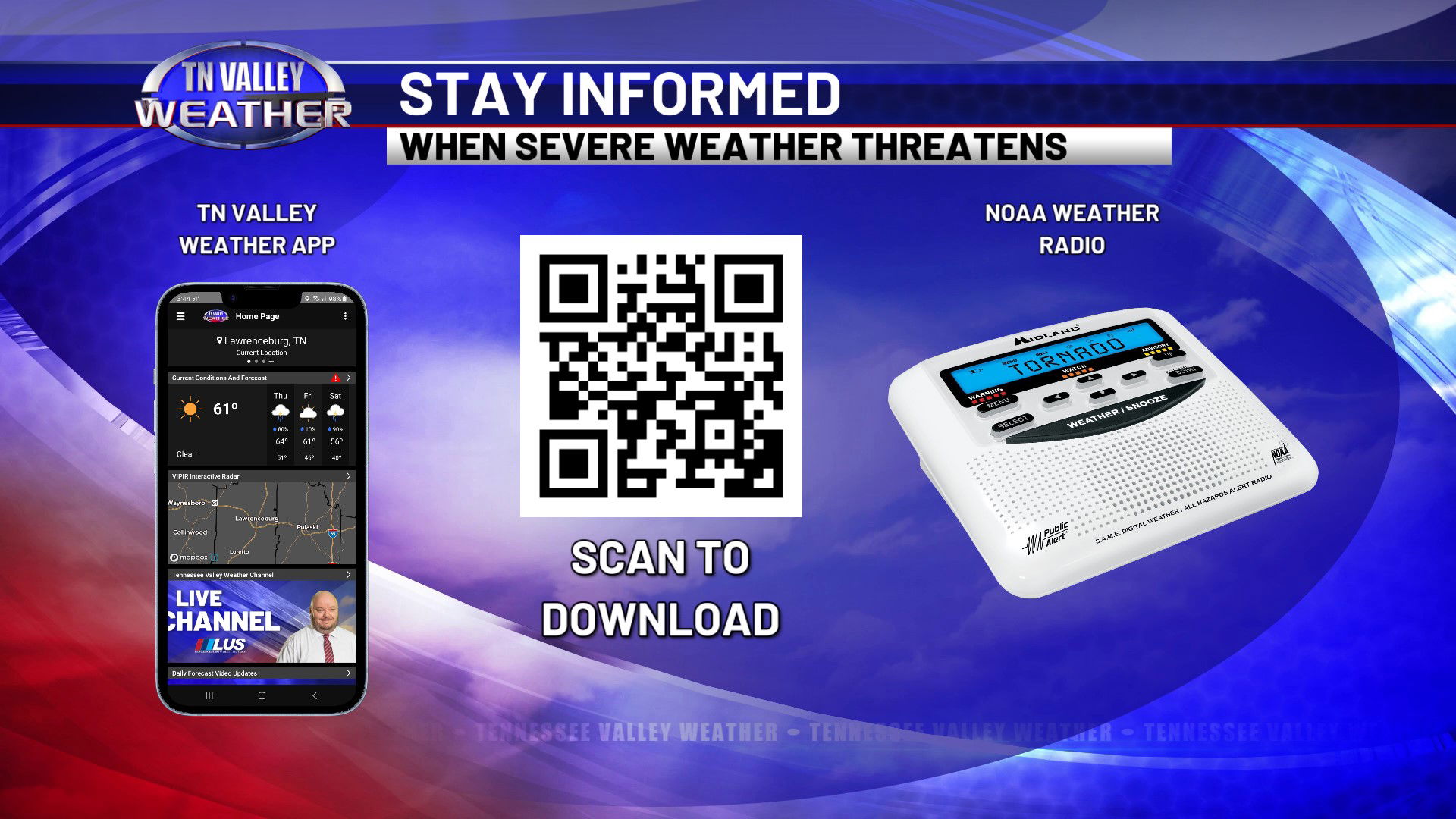
Just as important to the whole process is being able to reliably receive tornado warnings and severe thunderstorm warnings in a timely manner at all hours of the day or night. A significant percentage of our tornadoes and severe storms and tornadoes happen overnight, and it is critical that you have alerting methods that will wake you up. It is critical that you don’t just rely on a siren. Sirens serve a purpose, but they are meant to be outdoor warning systems that let you know to seek additional information. With modern home building practices from the last few decades and how homes today are insulated and often times sound-resistant or sound-proofed, you will not hear a siren outside miles away in the middle of the night while you’re sleeping as a storm is raging out your window. It’s just impossible. The baseline for every home is a NOAA weather radio. These act as the “siren” in your home. These tune to a broadcast sent out directly by the National Weather Service, and they sound a loud alarm in your home when a warning is issued. Modern ones are programmable by county, and as of late 2024, the newest releases of the WR-120B from Mildland actually let you program them for just your particular section of the county! However, just like with anything else, these can fail sometimes. A few of the weather radio transmitters in our viewing area are actually damaged and not working currently because of the ice storm. It is important that you have multiple reliable ways of hearing warnings, for redundancy in case one or two methods fail.
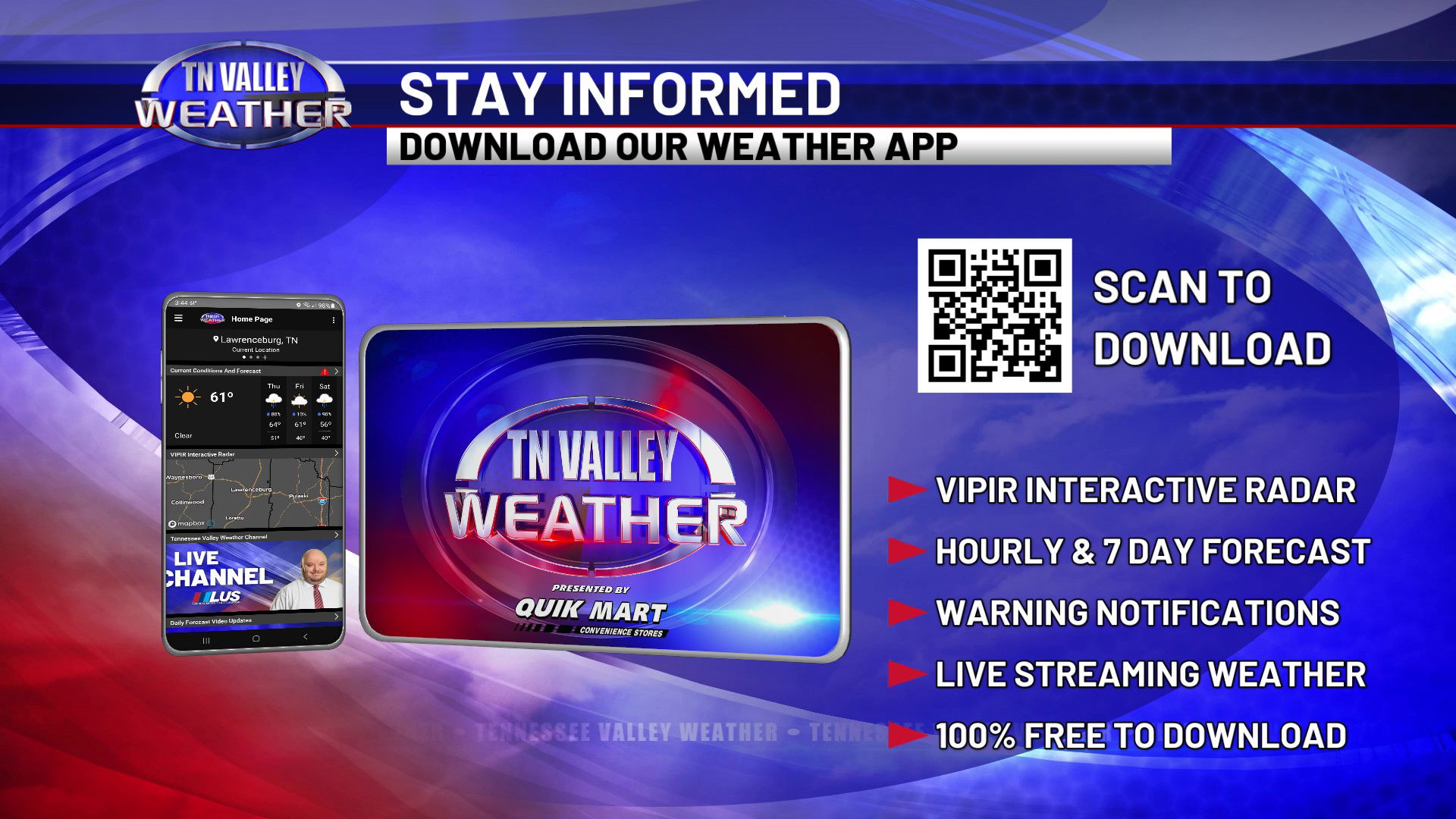
We offer a FREE weather app that you can find in the Apple App Store or Google Play. Just search for “Tennessee Valley Weather” and look for our logo. In addition to providing you with push notifications for watches and warnings, it gives you interactive real-time radar, current conditions, the latest hourly and extended forecast, and a live stream link to our 24/7 digital weather channel, meaning that you can watch our live severe weather coverage inside the app while you are at your shelter location.
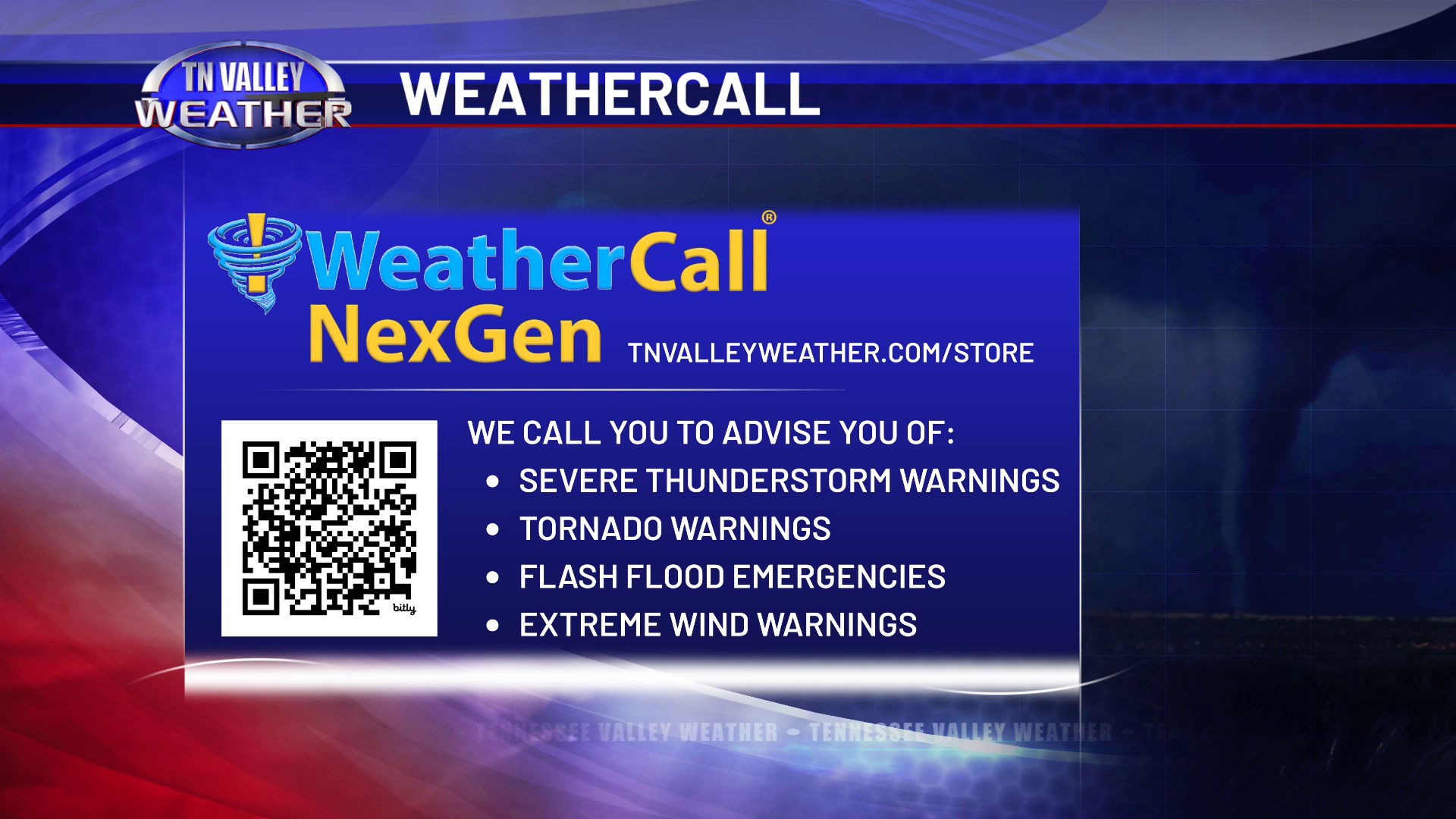
We have also partnered with the guys at WeatherCall to bring their service to you. This one isn’t free because they have to pay to run their infrastructure to keep the systems running, since they are a private business. The charge is $15/year, which averages out to just a little over a dollar a month, but it’s a yearly subscription. This systems calls your phone if you are in a warning, and it provides you with a special phone number to add to your Do Not Disturb settings for your phone, to guarantee you will be awakened by the call. If you sign up through our link at tnvalleyweather.com/store you will also hear Ben Luna or Fred Gossage from our weather team announce the warning information to you! It is a reliable and battled tested system that has worked for over 20 years now, and we are happy to be a partner affiliate!
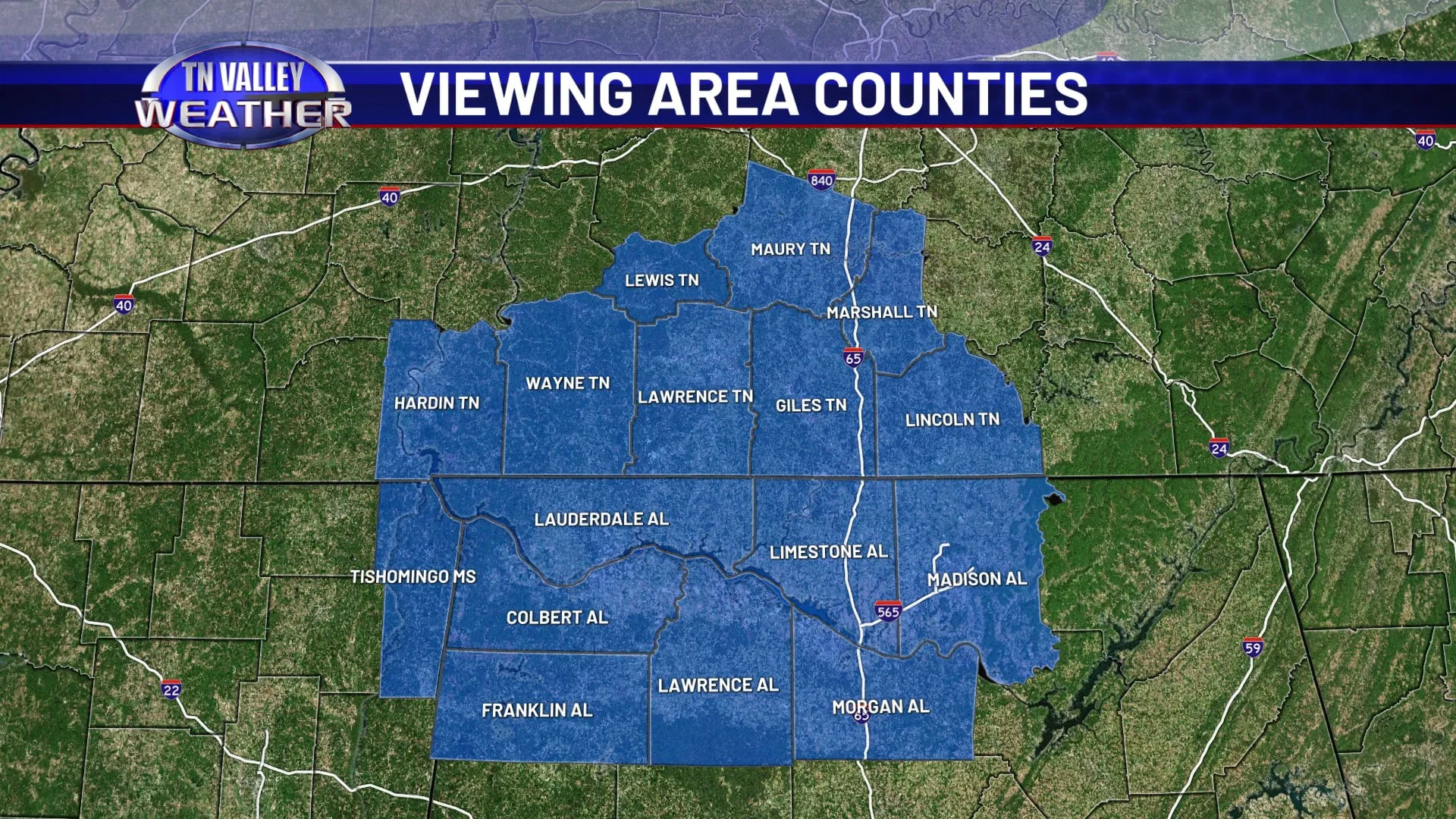
Then, when you get notification of a tornado warning, if you are in one of our 16 viewing area counties, you can ALWAYS depend on us to be there with LIVE NON-STOP coverage until the danger is over, no matter what time of day it is or what day of the year it is!
