
This week, the Tennessee Valley will be dealing with dangerous heat when it comes to air temperatures and heat index values. We will likely see at minimum daily Heat Advisories, if not Extreme Heat Warnings. Air temperatures are expected to reach the mid to upper 90s for the next several days, with heat index values 10-15 degrees warmer than that.
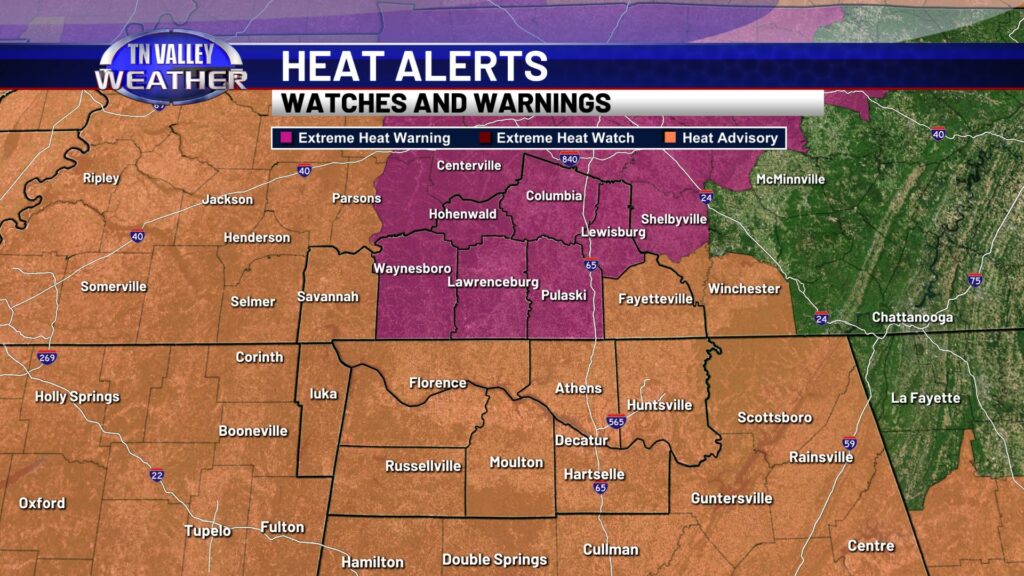
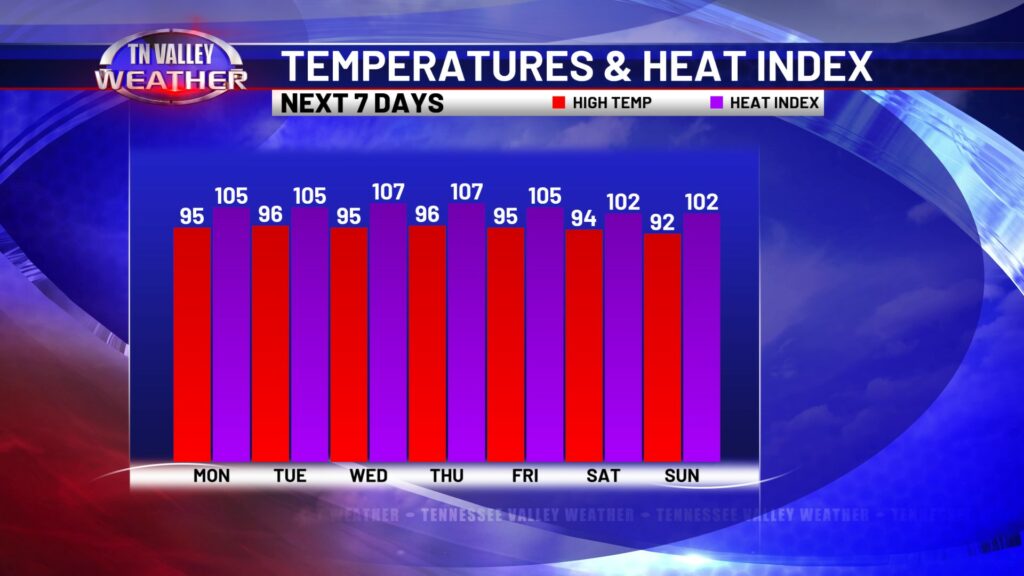
It’s times like these where knowing heat safety and best practices is critical. While not everyone may be impacted of affected by these temperatures other than an inconvenience, individuals such as infants, children, elderly, pregnant or those who experience a chronic illness are at risk of heat-related issues. Even if you are not included in this vulnerable population, this information is still important to be aware of, if not for you for the better of someone else!
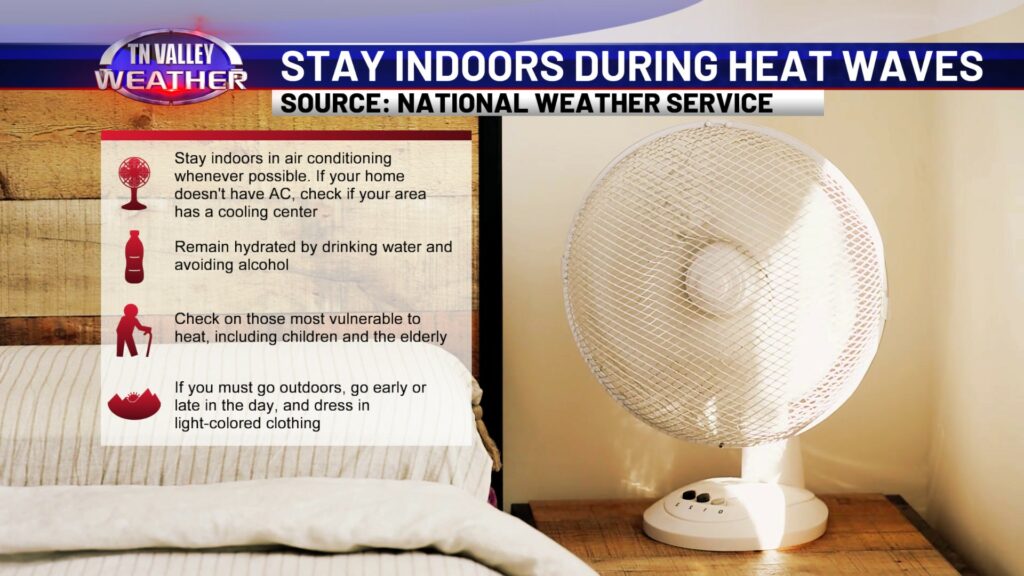
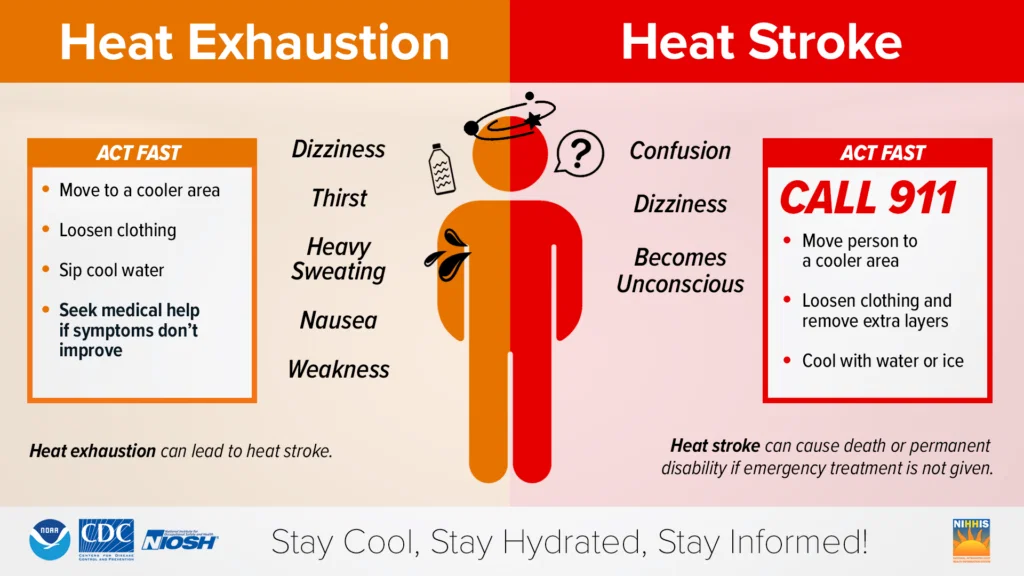
While temperatures outside are high, especially in the afternoon to early evening, try to stay in an air-conditioned location. If your house does not have air conditioning, then head to a local shop or library. It’s also a good idea to limit outdoor activities to JUST what is necessary, whether it be your line of work or a critical project. If something requires you to be outdoors, early morning or late evening is best. Dress in light-colored loose-fitted clothing that to reflect the sunlight while outdoors. Cotton and linen are effective materials. Stay hydrated and take frequent breaks while outside. If you must be outdoors due to work or extracurricular activities, be sure you know the symptoms to look for heat exhaustion and heat stroke and know the difference between the two, so you know when to seek medical care.
Heat Stress
- Symptoms:
- Muscle Cramps
- Headaches
- What to do:
- Reduce physical activities
- Move to a cooler location
- Slowly sip on cool water
Heat Exhaustion
- Symptoms:
- Clammy and pale skin
- Heavy sweating
- Dizziness
- Nausea
- Headache
- Rapid, weak pulse
- Fast, shallow breathing
- What to do:
- Immediately stop all physical activities
- Move to a cooler location
- Slowly sip on cool water
- Contact a medical professional if symptoms worsen or do not improve within 20 minutes
Heat Stroke
- Symptoms:
- Body temperature 103 degrees or above
- Red, hot and dry skin
- Rapid, strong pulse
- Dizziness and Nausea
- Confusion
- Unconsciousness
- What to do:
- Seek medical attention immediately
- Move to a cooler location
- Remove extra layers of clothing and loosen clothes
- Slowly cool with water or ice
Times like these are a good opportunity to check on family, friends, loved ones, etc. If you have everything you need and are taken care of, make sure those around you are as well. Again, you yourself may not be greatly impacted by this heat, but chances are, someone you know may be if they aren’t prepared or well-informed. Being prepared for scenarios like these can greatly impact the outcome in our favor.