
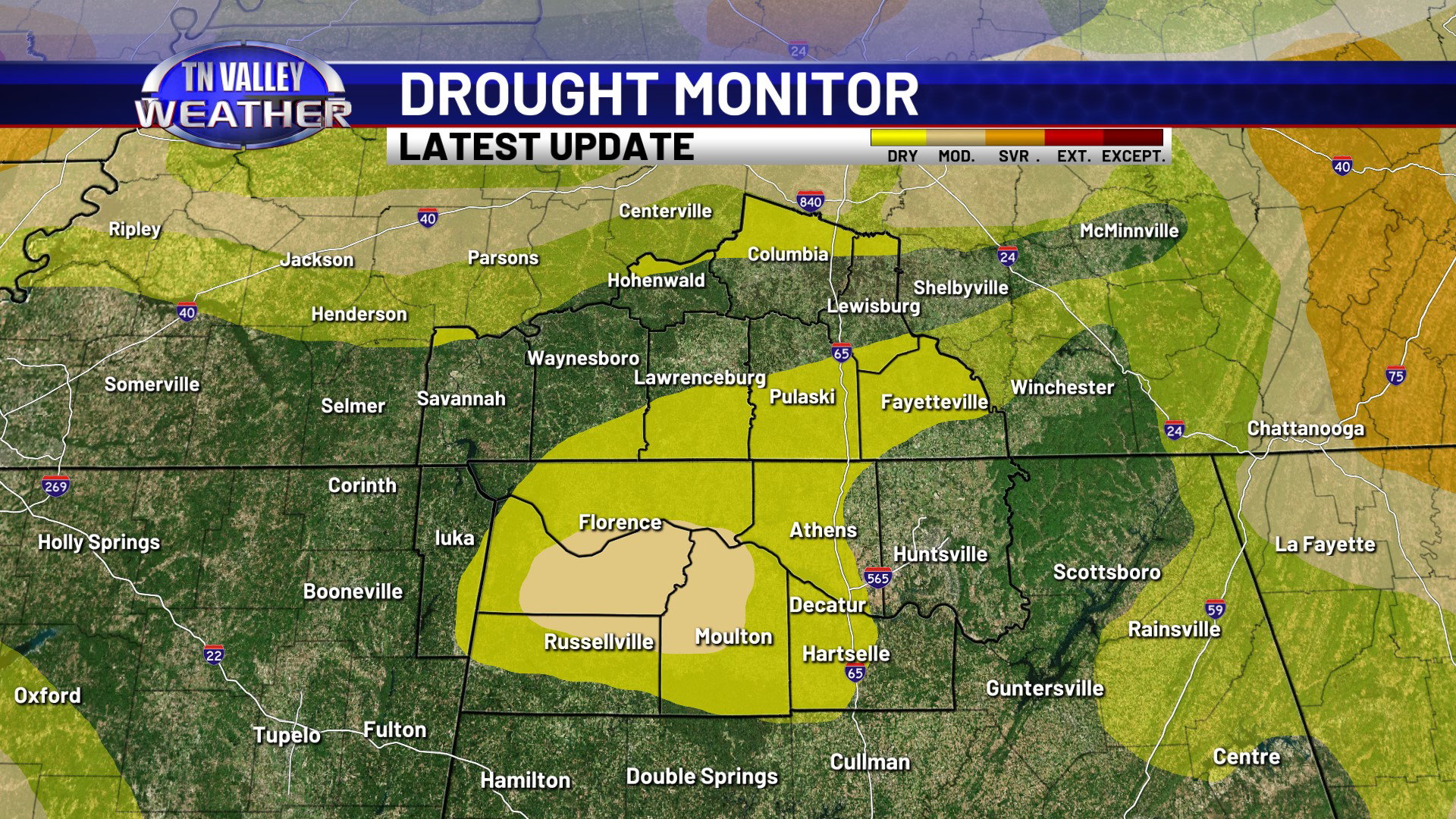
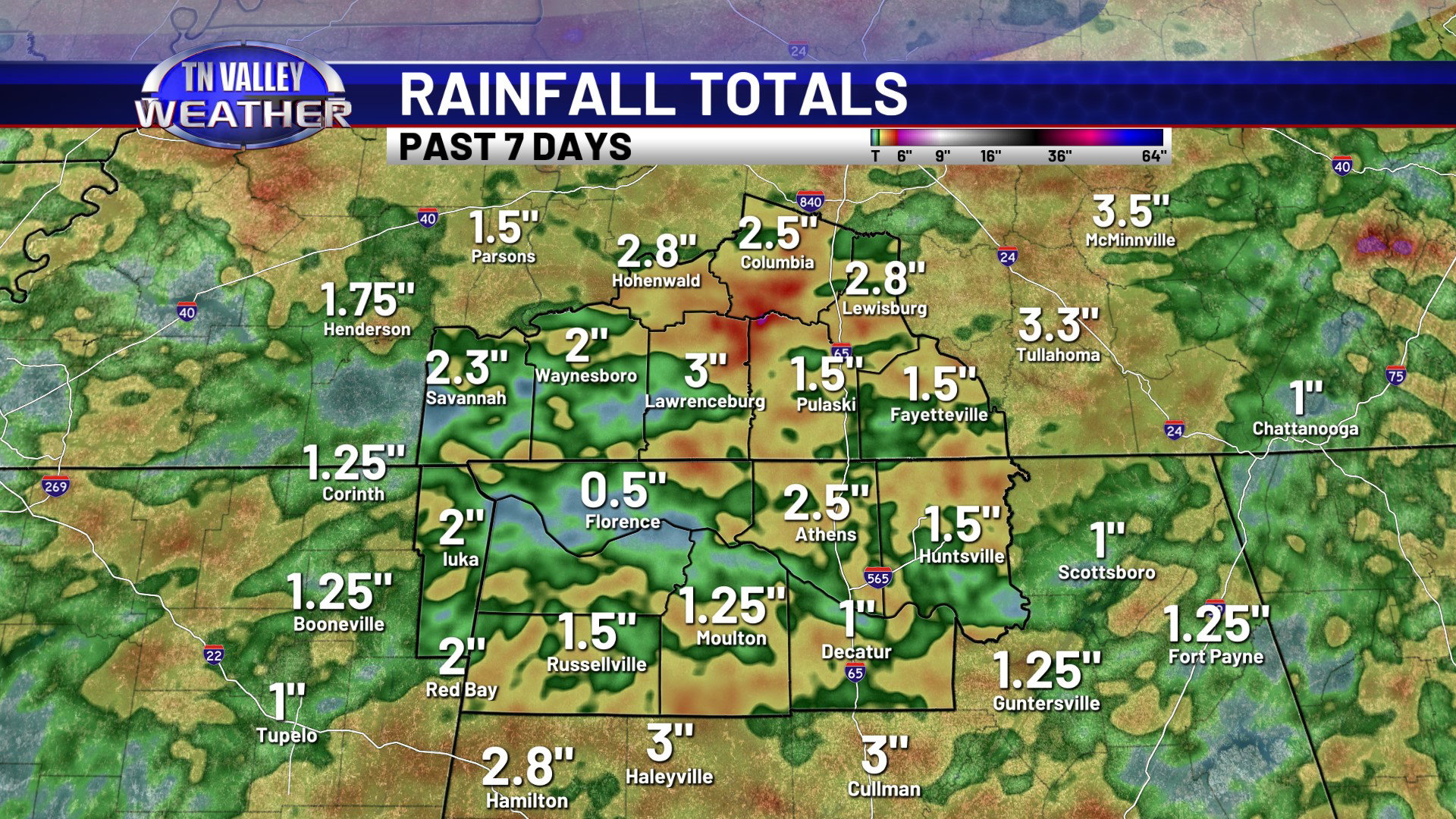
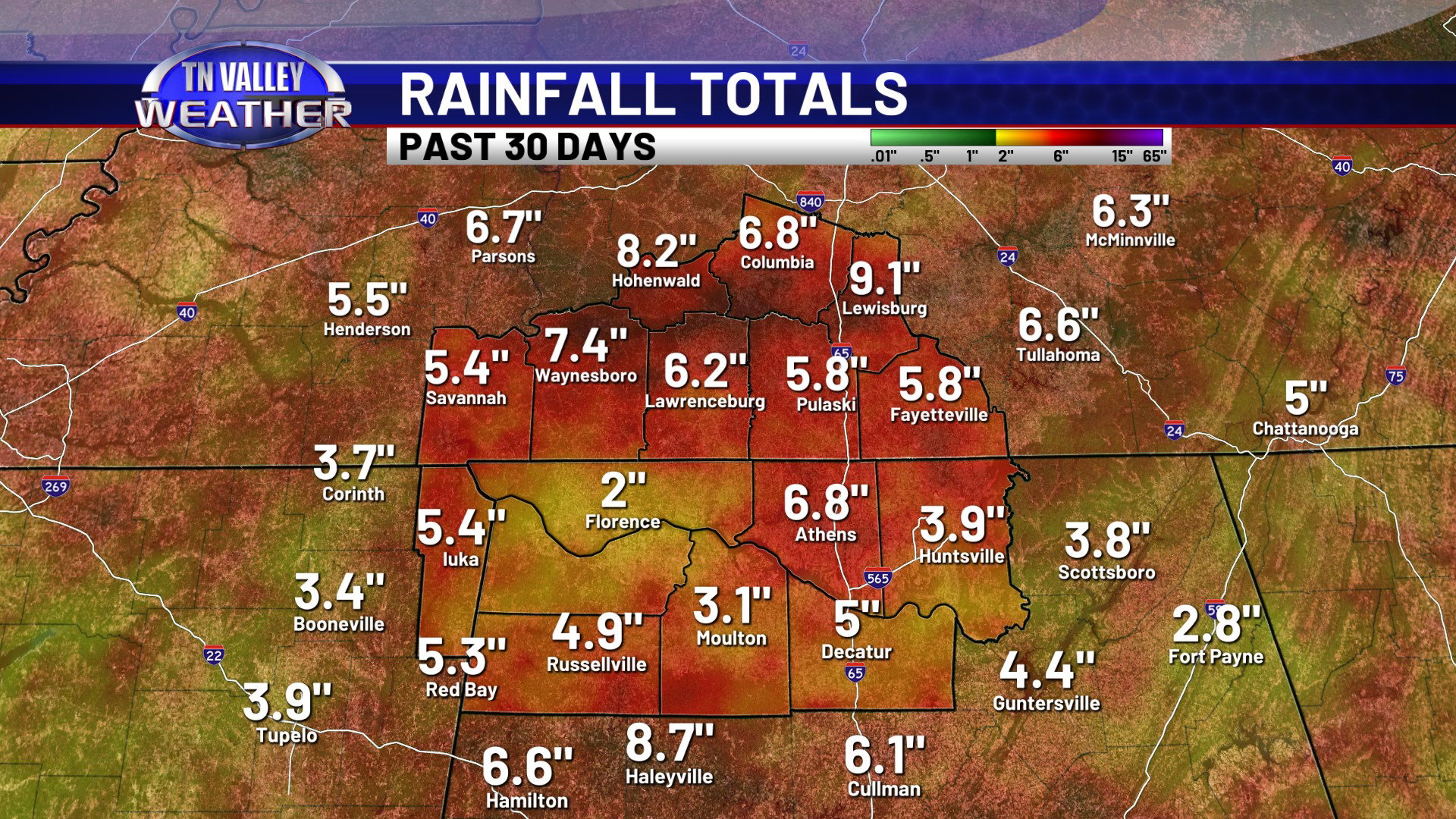
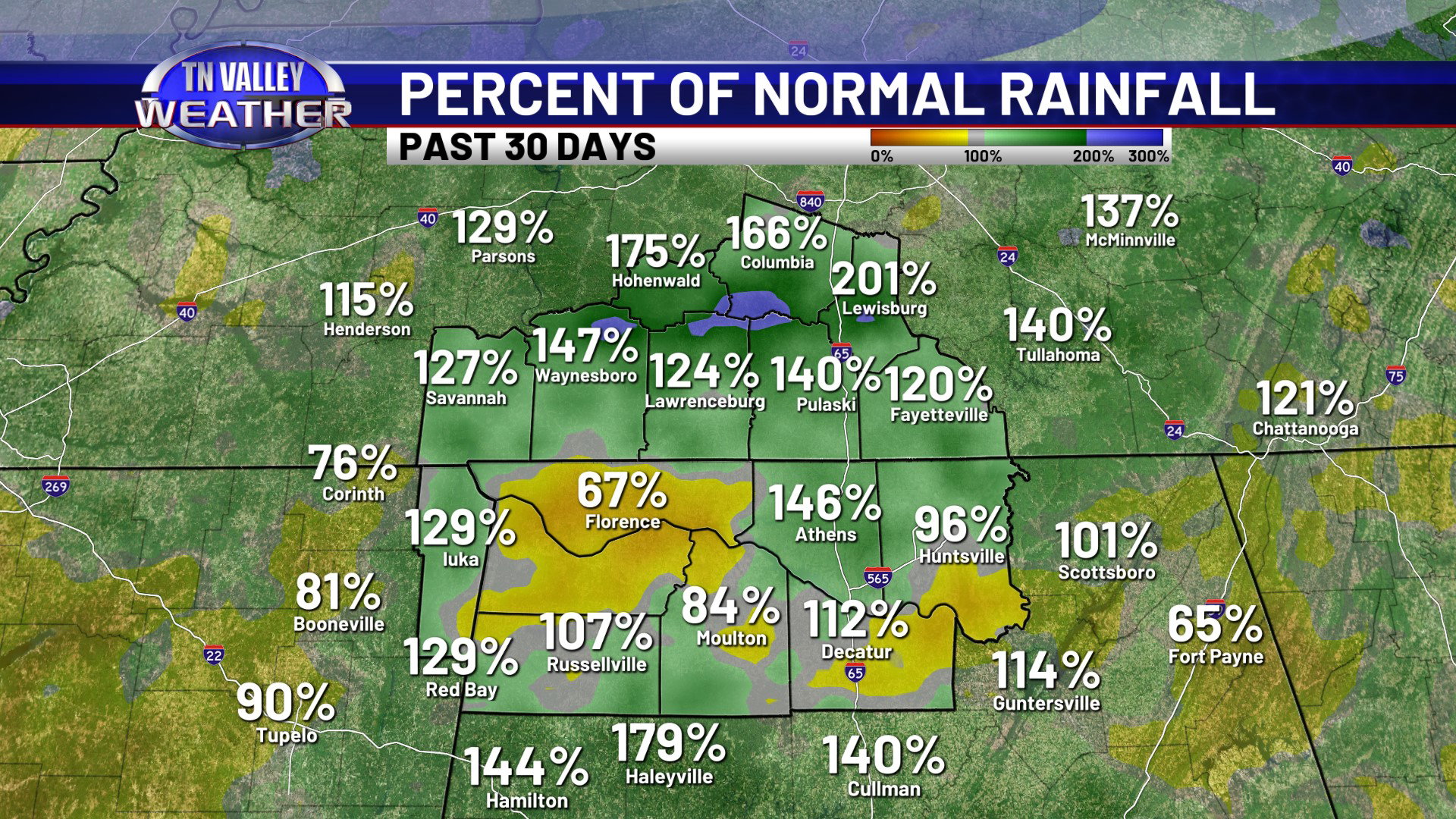
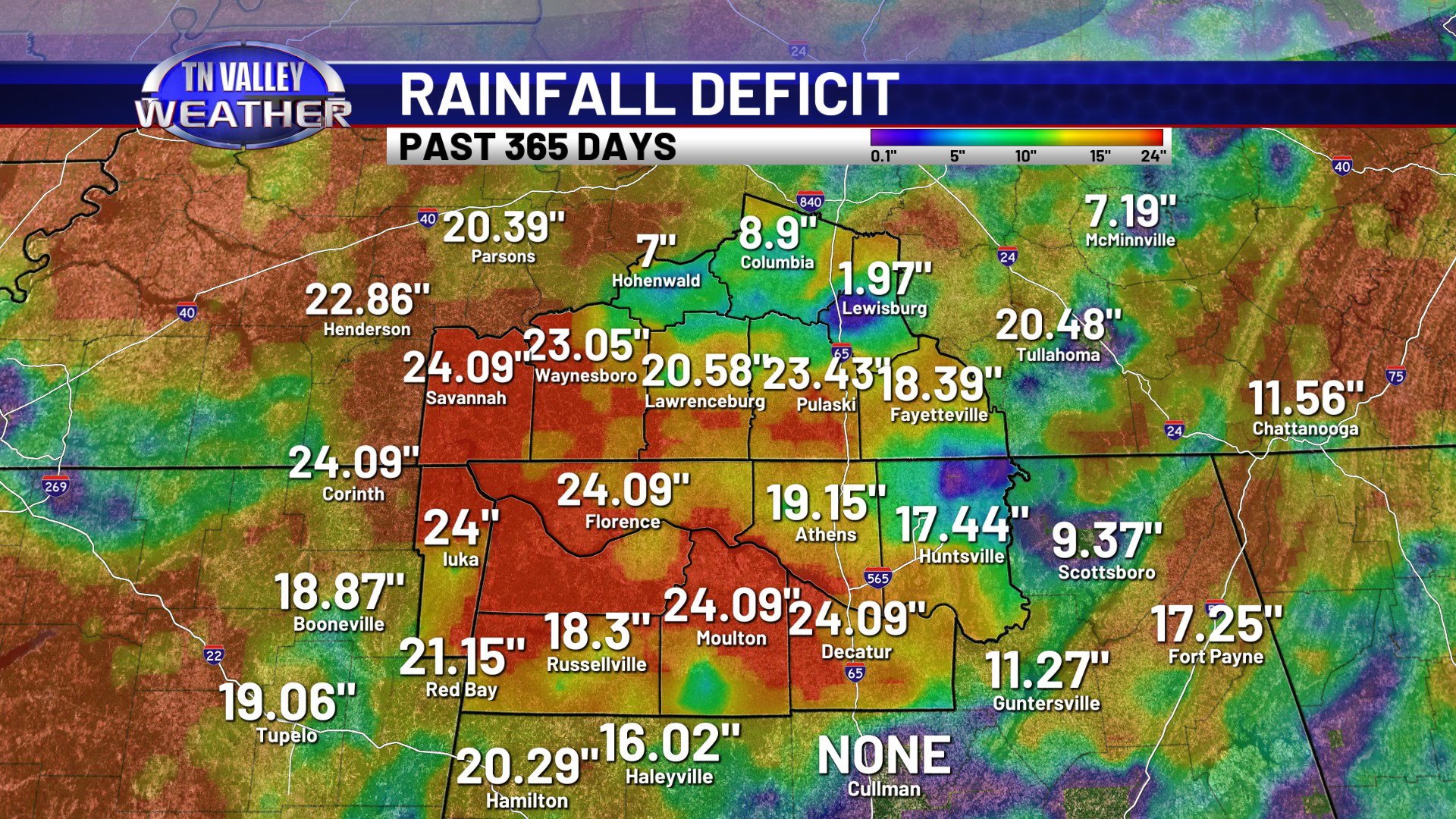
Things have changed substantially over the past couple of months. We went from having areas of severe to extreme drought in the viewing area during spring, to having the drought all but completely eradicated as of the most recent update issued back this past Thursday. Any remaining drought classification areas are due mainly to long-term rainfall deficits and not short-term soil conditions, water table levels, etc.,. Except for the immediate Shoals, most of the viewing area has had 2 or more inches of rain in just the past 7 days, with some areas between Lawrenceburg, TN and Columbia, TN receiving between 4 and 6 inches of rain, if not a little more. Much of southern middle Tennessee has seen between 5 and 8 inches of rain over the past 30 days. It’s been a little bit less over northwest Alabama, but it hasn’t been completely dry there either, although 30-day rainfall totals for the Shoals area are a bit below climatological average. Having said that, because of drought last summer and fall and then drought conditions back during this spring, we still have major long-term rainfall deficits across a large part of the area. Most areas from Highway 64 in Tennessee southward through northwest Alabama have 365-day rainfall deficits of 1 to 2 FEET. This means that we need to have this wet pattern semi-consistently return through the summer before we get into the dry season during fall to make sure that we don’t sneak back into rapidly-developing drought conditions from September and October into early November.
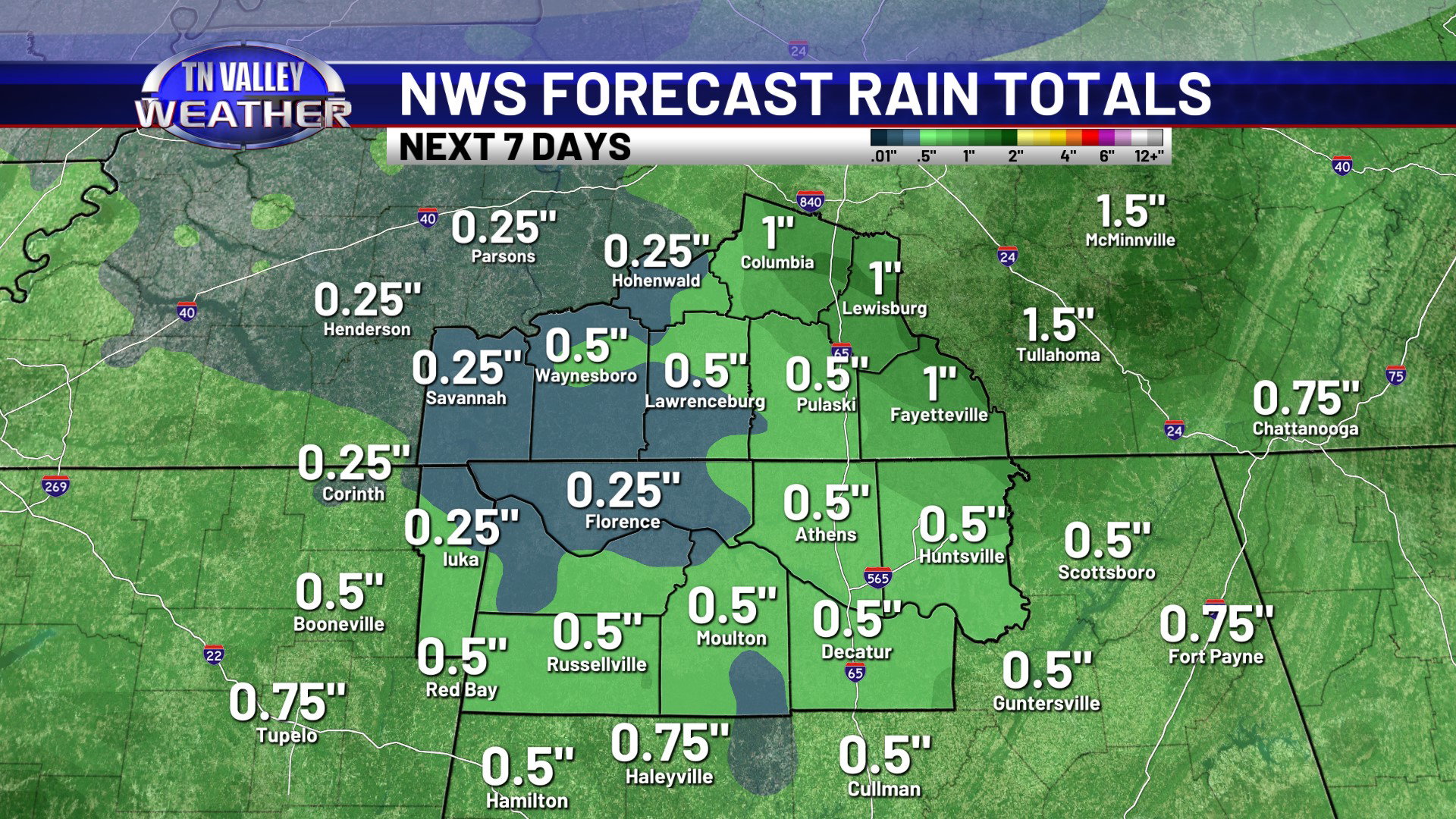
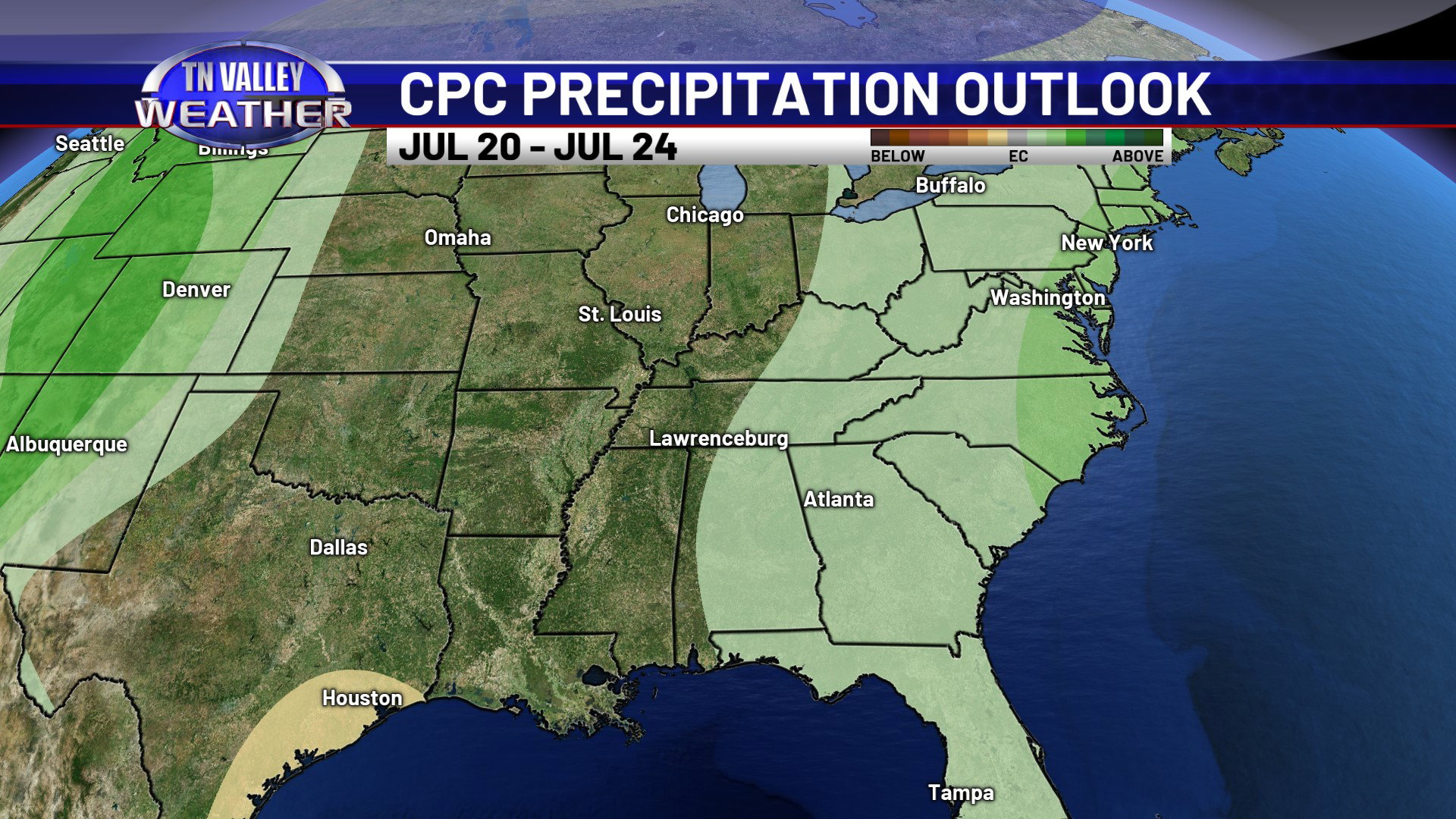
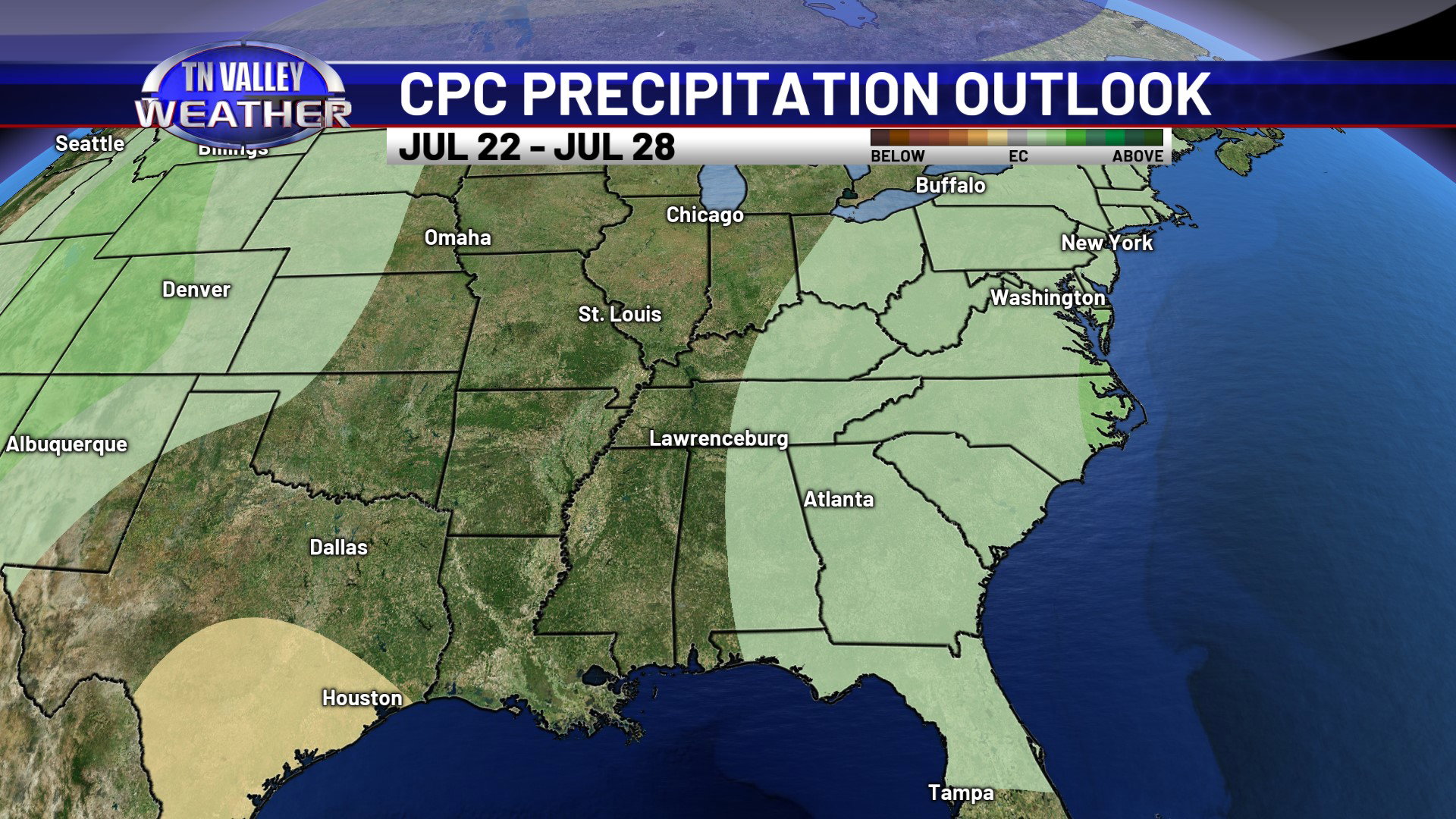
Rain totals for the next 7 days will start to go down a bit as the upper low near our area continues to weaken and pull west. We still won’t be completely dry though, as there are daily isolated to scattered rain chances in the forecast. Looking ahead, the NWS Climate Prediction Center has us in normal to slightly above normal precipitation chances in their 6-10 day and 8-14 day outlooks.
